875 posters, 25 topics, 3,440 authors, 1,061 institutions
ePostersLive by SciGen Technologies S.A. All rights reserved.
SAGES 2026 Annual Meeting Emerging Technology Session
March 25-28, 2026 | Tampa, FL, USA

P605
Multicenter Hiatal Hernia Repair (HHR) with Absorbable GORE® ENFORM Mesh
Poster Presenter
Authors
Ryan C Broderick, Nikita Thareja, Philip Woodworth, Jeremy Warren, Michael Ujiki, Juli Holihan, Todd Heniford, J S Roth
Affiliations
Endeavor Health, University of California, San Diego, Institute of Esophageal and Reflux Surgery, PRISMA Health Upstate, University of Texas Health Science Center at Houston, University of Kentucky Research Foundation, University of California, San Diego
Part of Topic
Foregut
MULTICENTER HIATAL HERNIA REPAIR (HHR) WITH ABSORBABLE GORE ENFORM MESH
Ryan C Broderick, MD1; Nikita Thareja, MD1; Philip Woodworth, MD2; Jeremy Warren, MD3; Michael Ujiki, MD4; Julie Holihan, MD5; Todd Heniford, MD4; J S Roth, MD6
1. University of California, San Diego; 2. Institute of Esophageal and Reflux Surgery; 3. PRISMA Health Upstate; 4. Endeavor Health; 5. University of Texas Health Science Center at Houston; 6. University of Kentucky Department of Surgery
Introduction Results
Hiatal hernia repair is commonly performed for symptomatic patients with large paraesophageal hernias or complex type III/IV defects. Achieving a durable repair can be challenging, as recurrence occurs in up to 38% of patients, often resulting in persistent symptoms or reoperation.
Permanent mesh reinforcement can reduce early recurrence rates, but has been associated with erosion, fibrosis, and chronic dysphagia. Bioabsorbable meshes provide temporary support during tissue healing and avoid long-term foreign material. However, outcomes have been variable, and concerns remain regarding early durability with absorbable mesh reinforcement.
Study Objective
The GORE ENFORM Preperitoneal Biomaterial is a fully absorbable mesh designed to reinforce the crura while resorbing over 6-7 months. This study evaluates the perioperative safety, early recurrence, and patient-reported outcomes after hiatal hernia repair reinforced with ENFORM mesh in a multicenter U.S. cohort.
Methods
Study Design
• Multicenter U.S. study (6 academic hospitals)
• Combined prospective (n=60) and retrospective (n=43) cohorts
• Standardized protocol for surgery, follow-up, and data collection;
mesh configuration, fixation, and anti-reflux procedures determined by
operating surgeon
Inclusion: Adults undergoing hiatal hernia repair with
ENFORM mesh reinforcement at hiatus
Data Collected
• Demographics and operative details
• Device- and procedure-related adverse events
• Hernia recurrence
• Patient-reported outcomes (GERD-HRQL)
Follow-Up
• Captured at post-procedure, 6 months, 12 months, and 24 months
• Median follow-up: 24.7 months
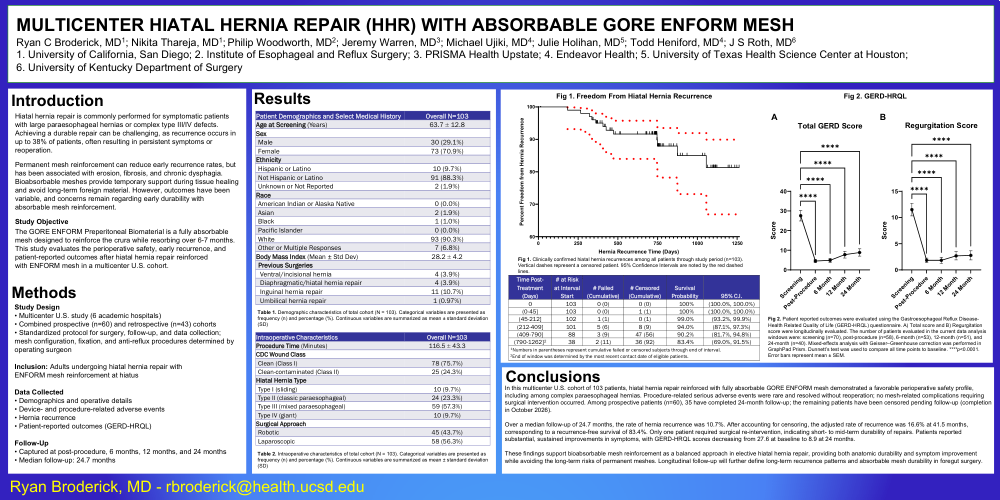
Table 1. Demographic characteristics of total cohort (N = 103). Categorical variables are presented as frequency (n) and percentage (%). Continuous variables are summarized as mean ± standard deviation (SD)
Table 2. Intraoperative characteristics of total cohort (N = 103). Categorical variables are presented as frequency (n) and percentage (%). Continuous variables are summarized as mean ± standard deviation (SD)
Fig 1. Clinically confirmed hiatal hernia recurrences among all patients through study period (n=103). Vertical dashes represent a censored patient. 95% Confidence Intervals are noted by the red dashed lines.
Fig 2. Patient reported outcomes were evaluated using the Gastroesophageal Reflux Disease- Health Related Quality of Life (GERD-HRQL) questionnaire. A) Total score and B) Regurgitation score were longitudinally evaluated. The number of patients evaluated in the current data analysis windows were: screening (n=70), post-procedure (n=58), 6-month (n=53), 12-month (n=51), and 24-month (n=40). Mixed-effects analysis with Geisser–Greenhouse correction was performed in GraphPad Prism. Dunnett’s test was used to compare all time points to baseline. ****p<0.0001. Error bars represent mean ± SEM.
Conclusions
In this multicenter U.S. cohort of 103 patients, hiatal hernia repair reinforced with fully absorbable GORE ENFORM mesh demonstrated a favorable perioperative safety profile, including among complex paraesophageal hernias. Procedure-related serious adverse events were rare and resolved without reoperation; no mesh-related complications requiring surgical intervention occurred. Among prospective patients (n=60), 35 have completed 24-month follow-up; the remaining patients have been censored pending follow-up (completion in October 2026).
Over a median follow-up of 24.7 months, the rate of hernia recurrence was 10.7%. After accounting for censoring, the adjusted rate of recurrence was 16.6% at 41.5 months, corresponding to a recurrence-free survival of 83.4%. Only one patient required surgical re-intervention, indicating short- to mid-term durability of repairs. Patients reported substantial, sustained improvements in symptoms, with GERD-HRQL scores decreasing from 27.6 at baseline to 8.9 at 24 months.
These findings support bioabsorbable mesh reinforcement as a balanced approach in elective hiatal hernia repair, providing both anatomic durability and symptom improvement while avoiding the long-term risks of permanent meshes. Longitudinal follow-up will further define long-term recurrence patterns and absorbable mesh durability in foregut surgery.
Ryan Broderick, MD - rbroderick@health.ucsd.edu