1,267 posters, 47 videos, 13 topics, 4 sessions, 853 authors
ePostersLive by SciGen Technologies S.A. All rights reserved.
SOHO 2026 Annual Meeting
September 9 - 12, 2026 | George R. Brown Convention Center, Houston, Texas

CML - 996
Genetic Heterogeneity and Alternative Mechanisms of Resistance to Tyrosine Kinase Inhibitors in Chronic Myeloid Leukemia
Poster Presenter
Authors
Part of Topic
Chronic Myeloid Leukemia (CML)
Introduction
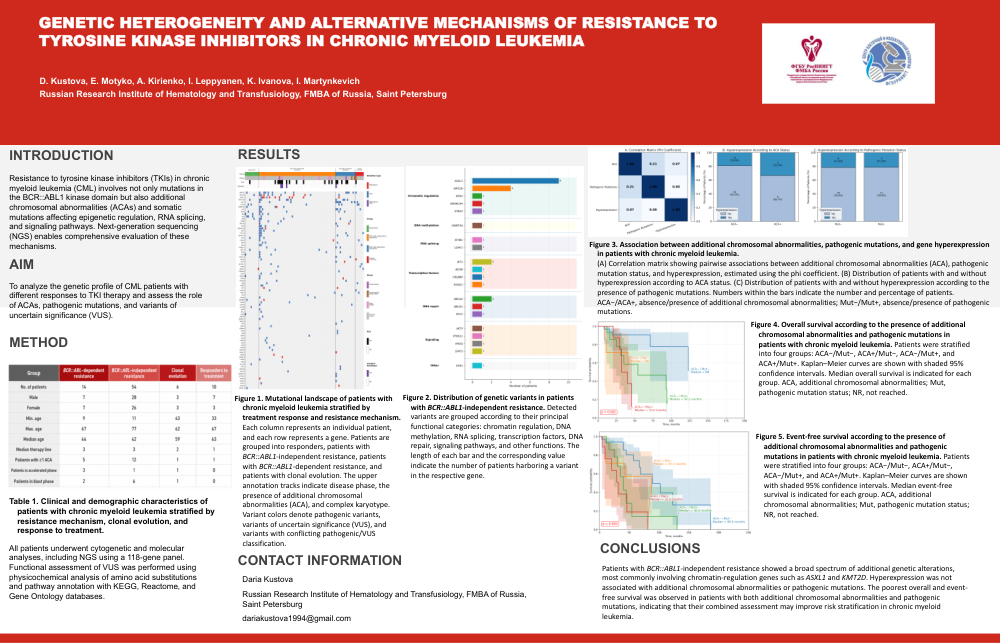
Resistance to tyrosine kinase inhibitors (TKIs) in chronic myeloid leukemia (CML) may result not only from mutations in the BCR::ABL1 kinase domain but also from alternative mechanisms, including additional chromosomal abnormalities (ACAs) and somatic mutations affecting various cellular pathways.
Aim
To characterize the genetic profile of CML patients with different mechanisms of TKIs resistance and treatment response, and to evaluate the potential contribution of ACAs, pathogenic mutations, and variants of uncertain significance (VUS).
Method
All patients underwent cytogenetic and molecular analyses, including NGS using a 118-gene panel. Functional assessment of VUS was performed using physicochemical analysis of amino acid substitutions and pathway annotation with KEGG, Reactome, and Gene Ontology databases.
Results
Patients with BCR::ABL1-independent resistance demonstrated the broadest spectrum of additional genetic alterations. Variants affected genes involved in chromatin regulation, DNA methylation, RNA splicing, transcriptional regulation, DNA repair, and signaling pathways, with ASXL1 and KMT2D among the most frequently altered chromatin-regulation genes. Gene hyperexpression was not associated with either ACAs or pathogenic mutations. The poorest overall and event-free survival was observed in patients harboring both ACAs and pathogenic mutations.
Conclusion
TKIs resistance in CML is genetically heterogeneous and may involve mechanisms beyond BCR::ABL1 kinase-domain alterations. Combined assessment of cytogenetic abnormalities and somatic mutations may improve identification of patients with adverse biological features and contribute to more comprehensive risk stratification.