516 posters, 59 topics, 63 sessions, 1,127 authors, 353 institutions
ePostersLive by SciGen Technologies S.A. All rights reserved.
2026 SOAP Annual Meeting
April 29 - May 3, 2026 | Montreal, Quebec Canada

2329762
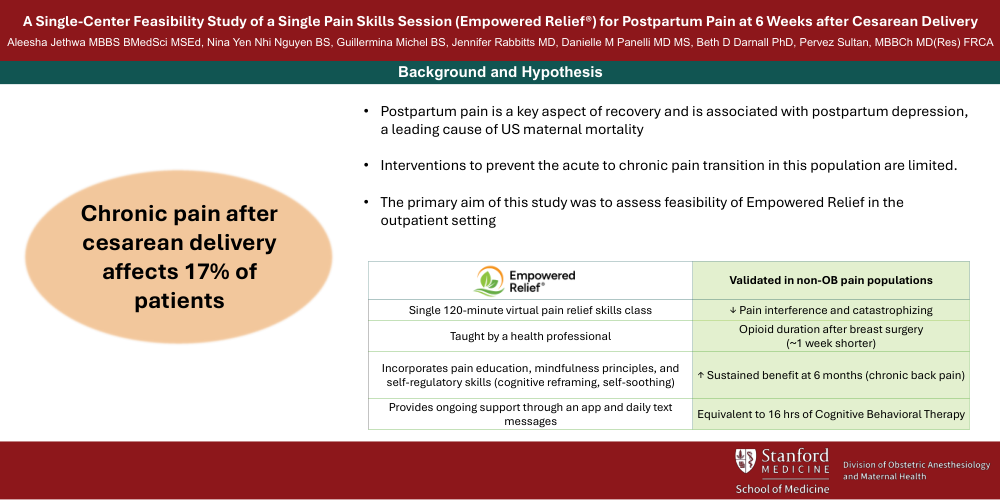
A Single-Center Feasibility Study of a Single Pain Skills Session (Empowered Relief®) for Postpartum Pain at 6 Weeks after Cesarean Delivery
Poster Presenter
Part of Topic
Pain Control
Introduction: Approximately 17% of patients that undergo cesarean delivery (CD) experience chronic pain, which can impact quality of life. While risk factors for chronic pain after CD have been explored, interventions to reduce chronic pain burden are limited. The primary aim of this study was to explore feasibility of a novel pain coping skills session (Empowered Relief) delivered in the outpatient setting after CD.
Methods: Following IRB approval, patients were screened at the 6 week follow up clinic. Adults were screened for pain symptoms (intensity, interference and qualitative descriptions) and those with ongoing moderate to severe pain (NRS ≥4/10) following a viable birth at any gestational age were randomized to receive virtual ER or standard follow-up. The primary outcome was feasibility (% registered and attended ER; treatment satisfaction). Secondary outcomes were change in pain interference, intensity, and catastrophizing before vs after treatment.
Results: Of 48 patients screened, 29 reported no pain, 15 had 1-3/10, and 4 had ≥4/10 pain intensity (92%; n=44 were ineligible for ER intervention). 3 eligible participants with pain ≥4/10 declined to participate due to the anticipated ER time commitment. 1 patient consented and registered for ER, however, did not attend for family reasons. The trial was terminated due to the low eligibility rate and an inability to deliver the ER intervention to sufficient patients over 3 months. Pain interference was reported by 41 patients (24 (59%) and 10 (24%) reporting interference >0/10 and ≥4/10, respectively). Median pain intensity [IQR] was 0 [0,3] (n=48) and median pain interference [IQR] was 1 [0, 1.25] (n=41). 17 patients (35%) reported different pain intensity scores to the obstetric clinic team vs research team, with the majority (15/17; 88%) reporting higher scores to the research team.
Conclusion: The main finding from this study is that the inclusion criteria comprising a moderate to severe NRS pain intensity score of ≥4/10 yielded an inadequate proportion of eligible patients for ER intervention in the 6 week follow-up clinic setting. Pain interference was frequently present despite low pain intensity, and EHR pain scores were frequently under reported compared to reporting to the research team. Future studies should consider inclusion criteria based on pain interference or intensity of any severity rather than moderate to severe pain intensity and use standardized researcher-collected screening rather than EHR pain scores.