516 posters, 59 topics, 63 sessions, 1,127 authors, 353 institutions
ePostersLive by SciGen Technologies S.A. All rights reserved.
2026 SOAP Annual Meeting
April 29 - May 3, 2026 | Montreal, Quebec Canada

2340950
Effect of Standardization of Care on Racial and Ethnic Disparities in Pain Management After Cesarean Delivery
Poster Presenter
Part of Topic
Cesarean Delivery Quality
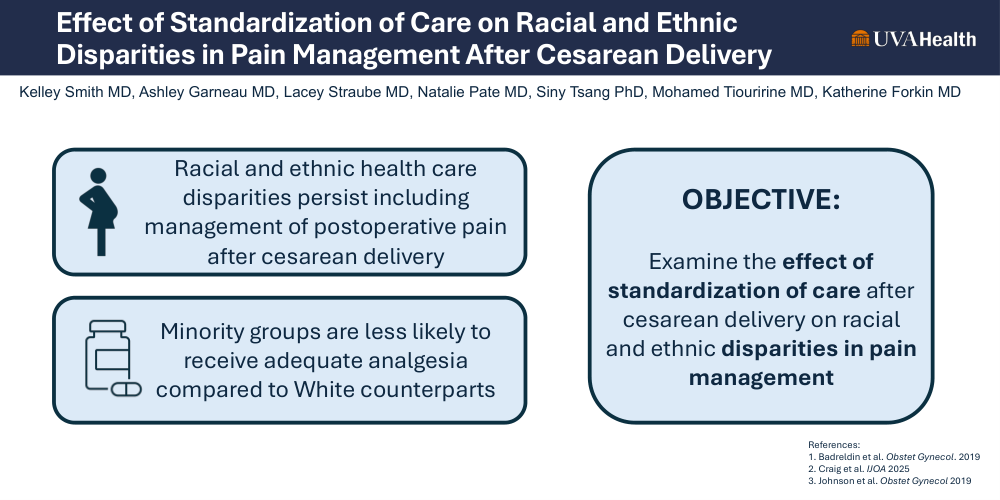
Despite sustained efforts to advance health equity, racial and ethnic disparities in health care still persist. One example is the management of postoperative pain following cesarean section, where evidence shows that women from racial and ethnic minority groups are less likely to receive adequate analgesia compared to their White counterparts. In this context, we examined the effect of standardization of care on racial and ethnic disparities in pain management after cesarean delivery.
This retrospective observational study employed segmented regression analysis to evaluate outcomes of interest among 5,344 women who underwent scheduled cesarean deliveries at the University of Virginia between 2014 and 2022, comparing pre- and post-intervention periods following the implementation of a standardized protocol aligned with Enhanced Recovery After Cesarean (ERAC) guidelines. The pre-intervention cohort (n=651) received routine, non-standardized perioperative management. In contrast, the post-intervention cohort (n=4,693) was managed using a standardized protocol.
Compared with non-Hispanic White patients, non-Hispanic Black patients experienced a small decrease in postoperative IV morphine equivalent use over time during the pre-ERAC period. At the start of the post-ERAC period, non-Hispanic Black patients received substantially higher postoperative IV morphine equivalents than non-Hispanic White patients, despite an overall reduction in opioid use across all patients. It is also noted that, compared to non-hispanic White patients, hispanic and non-hispanic other patients received less postoperative IV morphine equivalents, on average.
The results of this study suggest that non-hispanic Black women received more opioids to manage pain during post-ERAC period when compared to the pre-ERAC cohort of the same race/ethnicity. Standardization of care through an ERAC protocol altered patterns of opioid utilization after cesarean delivery. While overall opioid use declined, disparities persisted and, in some cases, shifted, particularly among non-Hispanic Black patients. These findings suggest that standardization alone may be insufficient to affect racial and ethnic disparities in postoperative pain management.