516 posters, 59 topics, 63 sessions, 1,127 authors, 353 institutions
ePostersLive by SciGen Technologies S.A. All rights reserved.
2026 SOAP Annual Meeting
April 29 - May 3, 2026 | Montreal, Quebec Canada

2336571
Neuraxial Anesthesia for Cesarean Delivery in a Patient with Brugada Syndrome: A Case Report and Systematic Review
Poster Presenter
Authors
Andrew Woodman, Zachary Laksman, Marla Kiess, Jennifer Oakes, Jasmine Grewal, Anthony Chau
Affiliations
Part of Topic
ARRHYTHMIAS, AICDS, AND PACEMAKERS
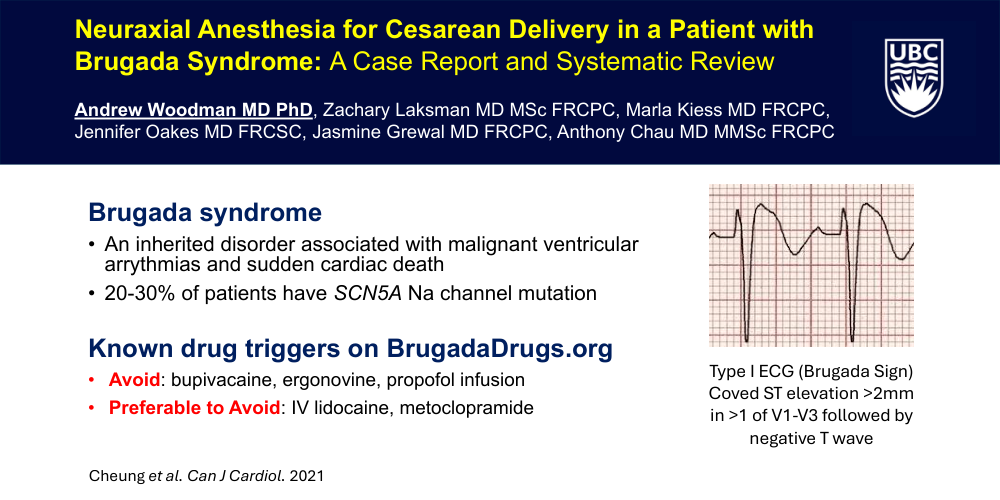
Brugada syndrome
•An inherited disorder associated with malignant ventricular arrythmias and sudden cardiac death
•20-30% of patients have SCN5A Na channel mutation
•
Known drug triggers on BrugadaDrugs.org
•Avoid: bupivacaine, ergonovine, propofol infusion
•Preferable to Avoid: IV lidocaine, metoclopramide
Case
22 yo G2P1 patient with Brugada Syndrome scheduled for repeat CS
Relevant Hx:
•BMI 53, Type II DM, Gestational HTN
•Previous CS under spinal bupivacaine
•Neonatal seizure led to workup
•SCN5A mutation identified in patient
•Type I-like pattern on provocation testing, leading EP to strongly recommend avoiding bupivacaine
Intraoperative management
•Lidocaine CSE
•Spinal: 30mg lidocaine, 15mcg fentanyl and 100mcg morphine
•Epidural: total 15mL epidural 2% lidocaine with 1:200,000 epinephrine
Outcome:
•Brief episode of SVT post spinal, treated with IV labetalol and midazolam
•Remainder of course uneventful, discharged home POD3
Systematic Review
•Neuraxial anesthesia in patients with Brugada Syndrome
•13 case reports
•3 case series
•1 retrospective cohort
•71 neuraxial cases (46 obstetric)
•8 reported cases of IT bupivacaine
•Arrhythmias reported only for thoracic surgeries in 3 elderly men (age 56-77) with bupivacaine epidurals
VT, VF, provoked Brugada sign
Learning Points:
•Available literature is insufficient to support or refute recommendations to avoid bupivacaine.
•
•Key factors associated with risk: dose, duration of exposure, patient phenotype
•Alternatives available: Lidocaine CSE or neuraxial techniques with ropivacaine may be most suitable alternatives.