516 posters, 59 topics, 63 sessions, 1,127 authors, 353 institutions
ePostersLive by SciGen Technologies S.A. All rights reserved.
2026 SOAP Annual Meeting
April 29 - May 3, 2026 | Montreal, Quebec Canada

2334732
A retrospective analysis of neuraxial anesthesia failures for postpartum tubal ligation procedures: could umbilical sparing be to blame?
Poster Presenter
Authors
Affiliations
Part of Topic
Potpourri
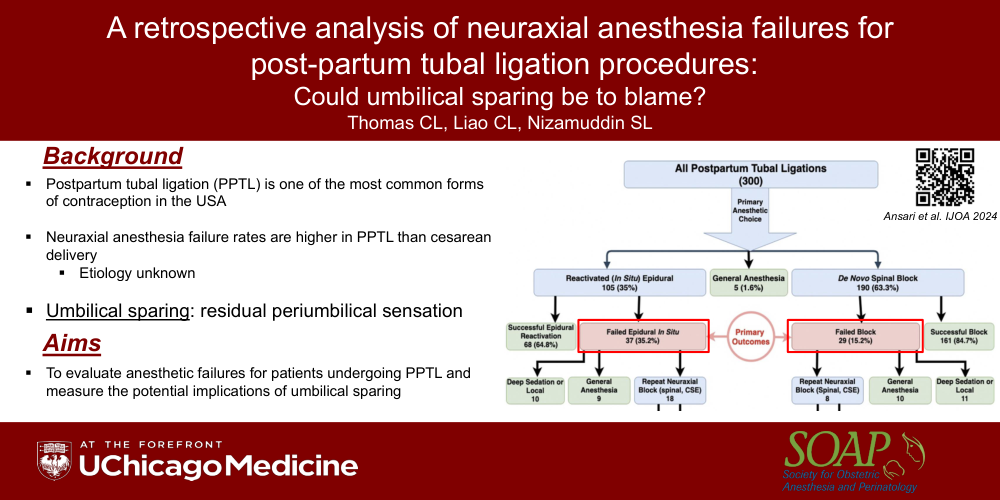
A retrospective analysis of neuraxial anesthesia failures for post-partum tubal ligation procedures: Could umbilical sparing be to blame?
Background:
Postpartum tubal ligation (PPTL) is one of the most common forms of contraception in the USA
Neuraxial anesthesia failure rates are higher in PPTL than cesarean delivery -> etiology unknown
Umbilical sparing: residual periumbilical sensation
Aims:
To evaluate anesthetic failures for patients undergoing PPTL and measure the potential implications of umbilical sparing
Methods:
A priori sub-analysisof single-center retrospective cohort study
Inclusion: PPTL during same admission as vaginal delivery (2013-2023)
Exclusion: PPTL with concurrent cesarean delivery; interval PPTL
Primary outcome
Rate of umbilical sparing
Rate of anesthetic failure due to umbilical sparing
Results:
363 patients underwent PPTL
69(19%) patients with failed anesthesia
40 (11%) patients had umbilical sparing
19 (47.5%) had anesthesia failure due to umbilical sparing
Discussion:
Umbilical sparing occurs in 11% of all PPTL patients
Umbilical sparing is implicated in 28% of neuraxial anesthesia failures
53% of patients with umbilical sparing underwent successful PPTL after periumbilical lidocaine infiltration
Limitations:
Retrospective data may underestimate rate of umbilical sparing
Mechanism of umbilical sparing?
Future directions:
Prospective evaluation of potential explanatory variables:
Umbilical sparing rates
Standardization of periumbilical local anesthesia
Embryologic research on umbilical innervation