875 posters, 25 topics, 3,440 authors, 1,061 institutions
ePostersLive by SciGen Technologies S.A. All rights reserved.
SAGES 2026 Annual Meeting Emerging Technology Session
March 25-28, 2026 | Tampa, FL, USA

P395
Neostigmine: A potential cause of anastomotic leak
Poster Presenter
Authors
Affiliations
Part of Topic
Colorectal
Background: Anastomotic leaks are amongst the most dreaded complications in colorectal with a prevalence of 3% to 8%.1 Risk factors include malnutrition, diabetes, smoking, and obesity. Little has been studied regarding the relationship between neostigmine and intestinal anastomoses. Case reports have shown that neostigmine has increased the rate of anastomotic breakdown to as high as 36%.2 This theory stems from its effect to potentially increase colorectal tone and increase tension on the anastomosis.3
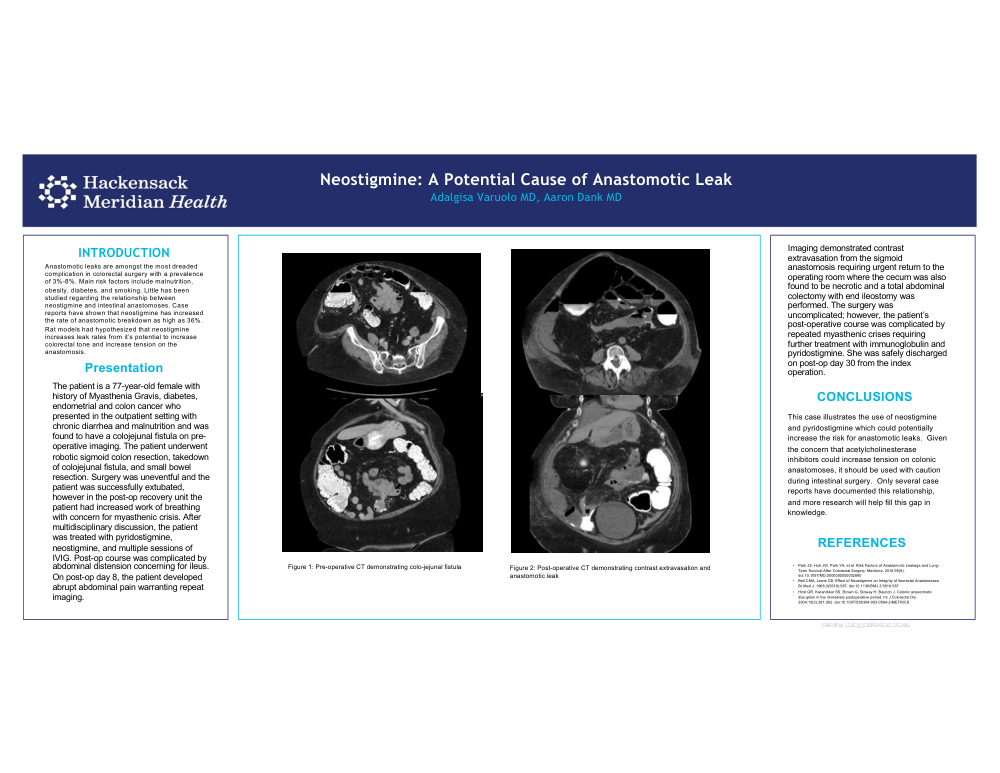
Presentation: The patient is a 77-year-old female with a history of Myasthenia Gravis, chronic diarrhea and malnutrition. The patient was found on workup to have a colojejunal fistula on preoperative imaging. The patient after completing workup and nutritional optimization underwent a robotic sigmoid colon resection, takedown of colojejunal fistula, and small bowel resection. Even though the surgery was uneventful, and the patient was easily extubated postoperatively, it was noted in the post-operative area that the patient was having increased work of breathing with concern for myasthenia crisis. After discussion with the anesthesia and neurology team, the patient was treated with pyridostigmine, neostigmine, and multiple sessions of IVIG. The patient’s post op course was complicated by distension and mild abdominal discomfort concern for postoperative ileus, yet when she developed increased abdominal pain on postoperative day 8, imaging was performed which demonstrated contrast extravasation at the sigmoid colon anastomosis. The patient was emergently taken back to the operating room for an open total abdominal colectomy with end ileostomy. The surgery was uncomplicated, yet the post op course was further prolonged due to myasthenia crisis requiring further treatments with immunoglobulin and pyridostigmine. The patient was finally safely discharged on post operative day 30 from the index intervention.
Intervention: This 77-year-old female with history of myasthenia gravis underwent a sigmoid resection, takedown of fistula, and small bowel resection for a colojejunal fistula. The patient's postoperative course was complicated by an immediate myasthenia crisis requiring multiple treatments and an anastomotic leak prompting further surgical intervention. The patient required continued treatment for myasthenia crisis afterwards until she was discharged home on hospital day 30.
Conclusion: This case illustrates the use of neostigmine and pyridostigmine which could potentially increase the risk for anastomotic leaks. Given the concern that acetylcholinesterase inhibitors could increase tension on colonic anastomoses, it should be used with caution during intestinal surgery. Only several case reports have documented this relationship, and more research will help fill this gap in knowledge.