875 posters, 25 topics, 3,440 authors, 1,061 institutions
ePostersLive by SciGen Technologies S.A. All rights reserved.
SAGES 2026 Annual Meeting Emerging Technology Session
March 25-28, 2026 | Tampa, FL, USA

P324
Differences in Metabolic and Bariatric Surgery: Does Age Play a Role?
Poster Presenter
Part of Topic
Bariatric
Introduction:
While Metabolic and Bariatric Surgery (MBS) is recognized as a safe treatment for severe obesity, the number of adult patients significantly exceeds that of adolescents. Limited information exists comparing these populations. Although sex-based differences in adults are well-documented, they are less defined in adolescents. This study compared comorbidities and outcomes between adult and adolescent patients, focusing on sex-based differences.
Methods:
A retrospective cohort study was conducted comparing demographics, comorbidities, and weight loss outcomes between adult and adolescent patients who underwent sleeve gastrectomy at a single institution from 2013-2024. Sub-analyses by sex were performed. Continuous variables were expressed as medians with interquartile ranges and compared using Wilcoxon Rank-Sum tests. Categorical variables were analyzed with Pearson’s χ2 and Fisher's exact tests.
Results:
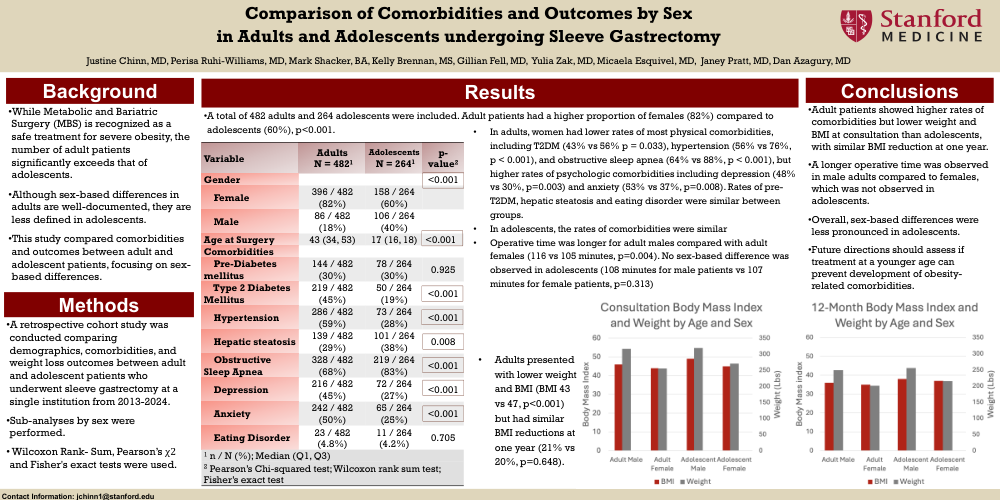
A total of 482 adults and 264 adolescents were included. Adult patients had a higher proportion of females (82%) compared to adolescents (60%), p<0.001. The average age at surgery was 43 years for adults and 17 for adolescents. Adults had higher rates of diabetes (45% vs 19%, p<0.001), hypertension (59% vs 28%, p<0.001), depression (45% vs 27%, p<0.001), and anxiety (50% vs 25%, p<0.001), but lower rates of hepatic steatosis (29% vs 38%, p=0.008) and obstructive sleep apnea (68% vs 83%, p<0.001). Adults presented with lower weight and BMI (BMI 43 vs 47, p<0.001) but had similar BMI reductions at one year (21% vs 20%, p=0.648). Male adults had longer operative times (p=0.013), and within adults, higher rates of diabetes and hypertension were noted in men. In adolescents, comorbidities were similar across genders.
Conclusions:
Adult patients showed higher rates of comorbidities but lower weight and BMI at consultation than adolescents, with similar BMI reduction at one year. A longer operative time was observed in male adults compared to females, which was not observed in adolescents. Overall, sex-based differences were less pronounced in adolescents.