875 posters, 25 topics, 3,440 authors, 1,061 institutions
ePostersLive by SciGen Technologies S.A. All rights reserved.
SAGES 2026 Annual Meeting Emerging Technology Session
March 25-28, 2026 | Tampa, FL, USA

P281
The Impact of Pregnancy on Weight Loss After Bariatric Surgery - A Systematic Review and Meta-analysis
Part of Topic
Bariatric
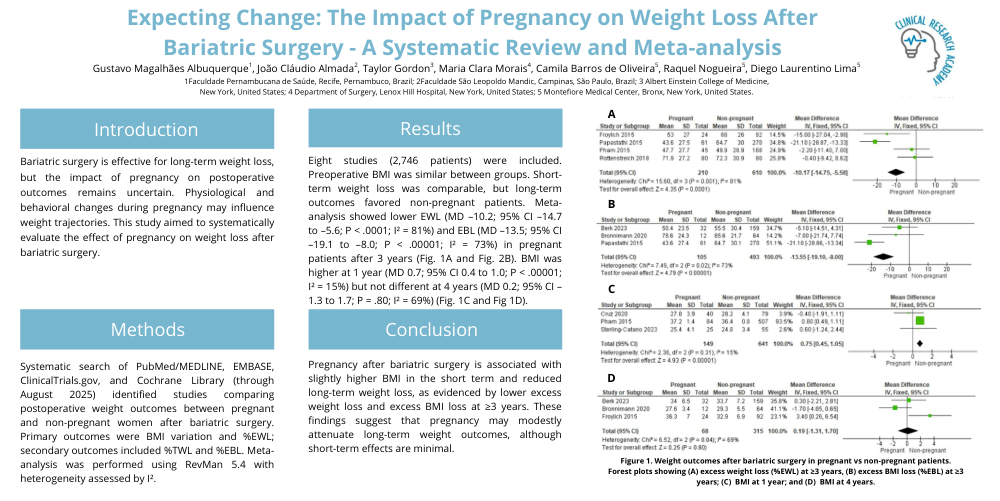
Bariatric surgery is effective for long-term weight loss, but the impact of pregnancy on postoperative outcomes remains uncertain. We conducted a systematic review of PubMed/MEDLINE, EMBASE, ClinicalTrials.gov, and Cochrane Library through August 2025 to compare weight outcomes between pregnant and non-pregnant women after bariatric surgery. Primary outcomes included BMI variation and excess weight loss (%EWL), with secondary outcomes of total weight loss (%TWL) and excess BMI loss (%EBL). Eight studies comprising 2,746 patients were included. Preoperative BMI was similar between groups. Short-term weight loss was comparable, but long-term outcomes favored non-pregnant patients. Meta-analysis demonstrated lower EWL (MD –10.2; 95% CI –14.7 to –5.6; P < .0001; I² = 81%) and EBL (MD –13.5; 95% CI –19.1 to –8.0; P < .00001; I² = 73%) in pregnant patients at ≥3 years. BMI was slightly higher at 1 year but not significantly different at 4 years. Pregnancy after bariatric surgery may modestly attenuate long-term weight loss outcomes.