875 posters, 25 topics, 3,440 authors, 1,061 institutions
ePostersLive by SciGen Technologies S.A. All rights reserved.
SAGES 2026 Annual Meeting Emerging Technology Session
March 25-28, 2026 | Tampa, FL, USA

P190
Weight Loss Across the Map: Rural-Urban Differences After Bariatric Surgery in Epic Cosmos
Poster Presenter
Part of Topic
Bariatric
Weight Loss Across the Map: Rural–Urban Differences After Bariatric Surgery in Epic Cosmos
Background:
-Obesity disproportionately affects rural populations1
-Observational data suggests rural populations experience delays in receiving care related to geographic isolation and logistical barriers2
-Prior studies looking at rural metabolic and bariatric surgery (MBS) are limited by sample size3,4
-Little is known regarding the factors of rural living on the impact of weight loss after MBS
Methods:
-A cross-sectional, retrospective analysis
-Data: Epic Cosmos
-A prospectively maintained, all-payer, nationwide dataset
-Electronic health records data from over 300 million patient charts
-Isolated patients who underwent roux-en-y gastric bypass (RYGB) and sleeve gastrectomy (SG) between 2017-2023
-Demographics and weight measurements in encounters after MBS
-Rural Urban Communting Area (RUCA)& codes obtained for each patient
-Scores from 1-6 were considered urban/suburban
-Scores 7-10 were considered rural
-Exclusion criteria: revisional surgery, those without RUCA codes
-Percent Total Body Weight Loss (%TBWL) at 12 and 24-months were evaluated as well as primary non-response (loss of <10% TBWL)
Discussion:
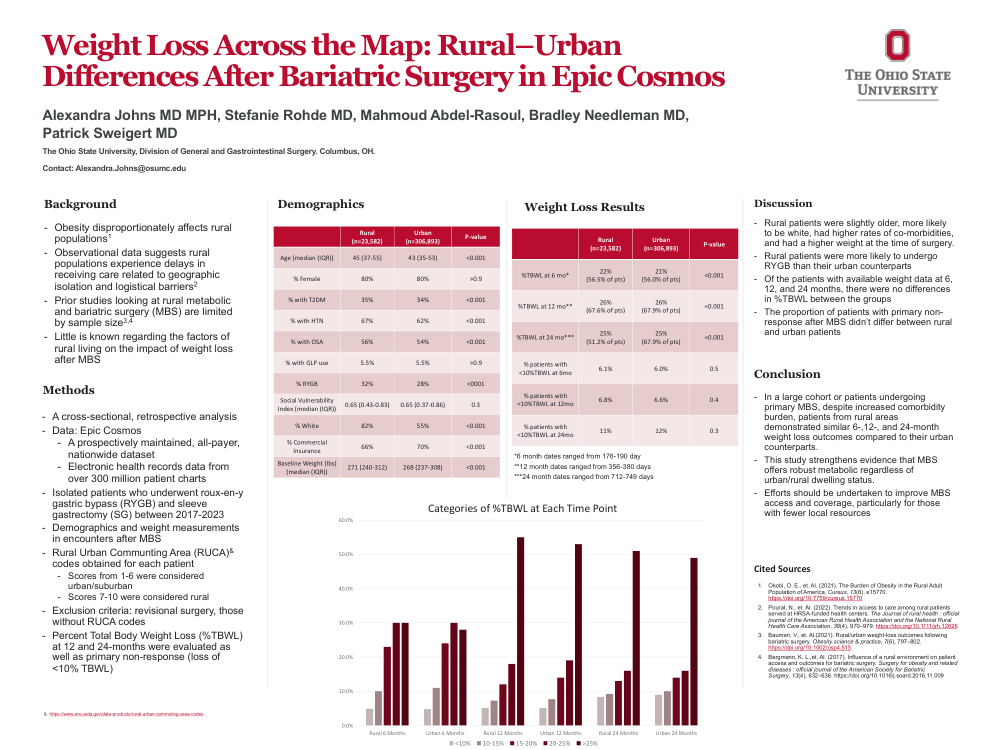
-Rural patients were slightly older, more likely to be white, had higher rates of co-morbidities, and had a higher weight at the time of surgery.
-Rural patients were more likely to undergo RYGB than their urban counterparts
-Of the patients with available weight data at 6, 12, and 24 months, there were no differences in %TBWL between the groups
-The proportion of patients with primary non-response after MBS didn’t differ between rural and urban patients