226 posters, 5 topics, 20 sessions, 598 authors, 292 institutions
ePostersLive by SciGen Technologies S.A. All rights reserved.
Obstetric Anaesthesia Annual Scientific Meeting 2026
14-15 May 2026 | Liverpool Convention Centre

7157021
Implementing a delivery suite transfer checklist
Poster Presenter
Authors
Affiliations
Part of Topic
Quality Improvement
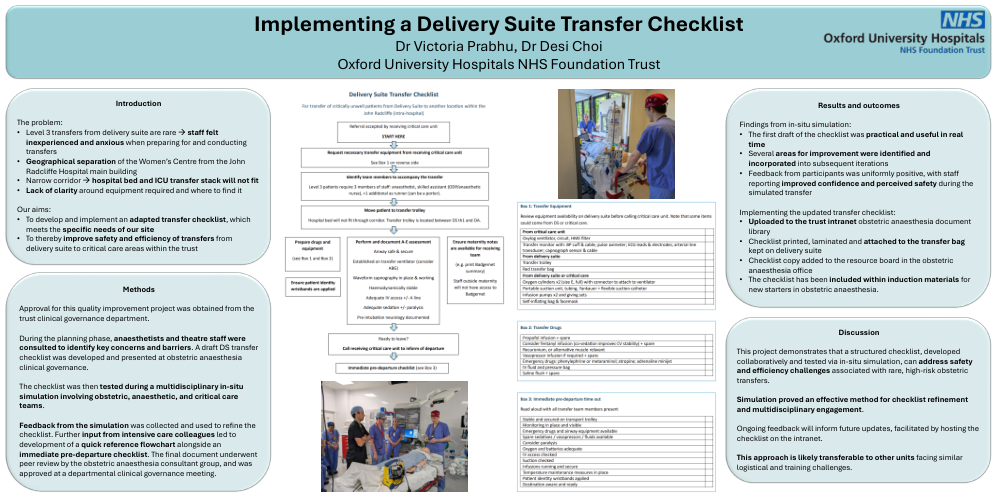
Implementing a Delivery Suite Transfer Checklist
Dr Victoria Prabhu, Dr Desi Choi
Oxford University Hospitals NHS Foundation Trust
Introduction
The problem:
Level 3 transfers from delivery suite are rare à staff felt inexperienced and anxious when preparing for and conducting transfers
Geographical separation of the Women’s Centre from the John Radcliffe Hospital main building
Narrow corridor à hospital bed and ICU transfer stack will not fit
Lack of clarity around equipment required and where to find it
Our aims:
To develop and implement an adapted transfer checklist, which meets the specific needs of our site
To thereby improve safety and efficiency of transfers from delivery suite to critical care areas within the trust
Methods
Approval for this quality improvement project was obtained from the trust clinical governance department.
During the planning phase, anaesthetists and theatre staff were consulted to identify key concerns and barriers. A draft DS transfer checklist was developed and presented at obstetric anaesthesia clinical governance.
The checklist was then tested during a multidisciplinary in-situ simulation involving obstetric, anaesthetic, and critical care teams.
Feedback from the simulation was collected and used to refine the checklist. Further input from intensive care colleagues led to development of a quick reference flowchart alongside an immediate pre-departure checklist. The final document underwent peer review by the obstetric anaesthesia consultant group, and was approved at a departmental clinical governance meeting.
Results and outcomes
Findings from in-situ simulation:
The first draft of the checklist was practical and useful in real time
Several areas for improvement were identified and incorporated into subsequent iterations
Feedback from participants was uniformly positive, with staff reporting improved confidence and perceived safety during the simulated transfer
Implementing the updated transfer checklist:
Uploaded to the trust intranet obstetric anaesthesia document library
Checklist printed, laminated and attached to the transfer bag kept on delivery suite
Checklist copy added to the resource board in the obstetric anaesthesia office
The checklist has been included within induction materials for new starters in obstetric anaesthesia.
Discussion
This project demonstrates that a structured checklist, developed collaboratively and tested via in-situ simulation, can address safety and efficiency challenges associated with rare, high-risk obstetric transfers.
Simulation proved an effective method for checklist refinement and multidisciplinary engagement.
Ongoing feedback will inform future updates, facilitated by hosting the checklist on the intranet.
This approach is likely transferable to other units facing similar logistical and training challenges.