301 posters, 50 videos, 13 topics, 13 sessions, 734 authors, 193 institutions
ePostersLive by SciGen Technologies S.A. All rights reserved.
ISMICS 2026 Annual Meeting
10 - 13 June, 2026 | Miami, Florida

D100
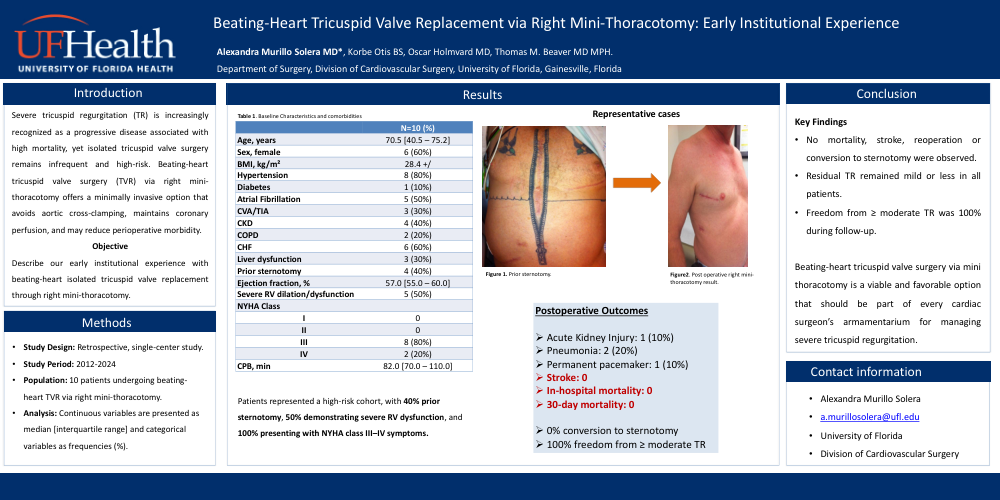
Beating-heart Tricuspid Valve Replacement Via Right Mini-thoracotomy: Early Institutional Experience
Part of Topic
Valve � Surgical Valves
Background: Severe tricuspid regurgitation (TR) is increasingly recognized as a progressive disease associated with excess mortality, yet isolated tricuspid valve surgery remains infrequent and high-risk. Beating-heart tricuspid valve surgery via right mini-thoracotomy offers a minimally invasive option that avoids aortic cross-clamping, maintains coronary perfusion, and may reduce perioperative morbidity. We describe our early institutional experience with this approach.
Methods: A retrospective review was conducted of consecutive patients undergoing isolated tricuspid valve replacement via right mini-thoracotomy with a beating-heart strategy between 2012-2024 at a single academic center. All procedures used femoral cannulation and targeted right atrial exposure to allow valve intervention on a beating heart without cross-clamping. All patients underwent replacement with bioprosthetic valves.
Results: A total of 10 patients were included; median age was 70.5 years [40.5–75.2], 6 were female, median BMI was 29 kg/m² [23.5–31.6], and all patients had severe TR. Median cardiopulmonary bypass time was 82.0 minutes [70.0–110.0], and no patients required conversion to sternotomy. Thirty-day mortality was 0%. No patients had stroke, reoperation for bleeding, or tracheostomy. One patient required permanent pacemaker implantation, and two developed pneumonia. Median hospital length of stay was 9.5 days [7.2–23.7]. At discharge, all patients had mild or less residual TR. At median follow-up of 202.5 days [85.7–367.7] freedom from ≥ moderate TR was 100%.
Conclusions: Beating-heart tricuspid valve replacement via right mini-thoracotomy is a safe and effective approach with low early morbidity and mortality. This minimally invasive strategy may broaden surgical options for patients with isolated severe TR, particularly those at higher risk for conventional sternotomy and cross-clamping.