395 posters, 1 audios, 13 topics, 29 sessions, 1,056 authors, 461 institutions
ePostersLive by SciGen Technologies S.A. All rights reserved.
51st Annual Regional Anesthesiology and Acute Pain Medicine Meeting
April 16 - 18, 2026 | Phoenix, Arizona

2314372
Superficial Parasternal Intercostal Plane Block for Post Sternotomy Pain in Pediatrics: A Case Report
Poster Presenter
Part of Topic
Medically Challenging Cases
Title: Superficial Parasternal Intercostal Plane Block for Post Sternotomy Pain in Pediatrics: A Case Report
Background and Objectives
Pain control after cardiac surgery involving median sternotomy is a major concern for pediatric patients [1]. Although the literature has several references to anterior truncal blocks in adults for the control of post sternotomy pain [2], there is a paucity of such procedures in the pediatric literature [3]. Our case presents the use of a superficial parasternal intercostal plane block (SPIP) in a pediatric patient undergoing cardiac surgery with median sternotomy.
Methods
Parent/guardian informed consent was obtained through verbal discussion for both the procedure and the submission of this case presentation. This is a case presentation and IRB approval is not required.
Case Description
A 12 year old male weighing 85.5kg presented for resection of subaortic membrane via redo sternotomy and cardiopulmonary bypass. The case was done under general anesthesia. The patient received a total of 6mg of midazolam, 950mcg of fentanyl as a bolus and infusion, and 0.8mg of hydromorphone during the case.
Regional Anesthetic and Results
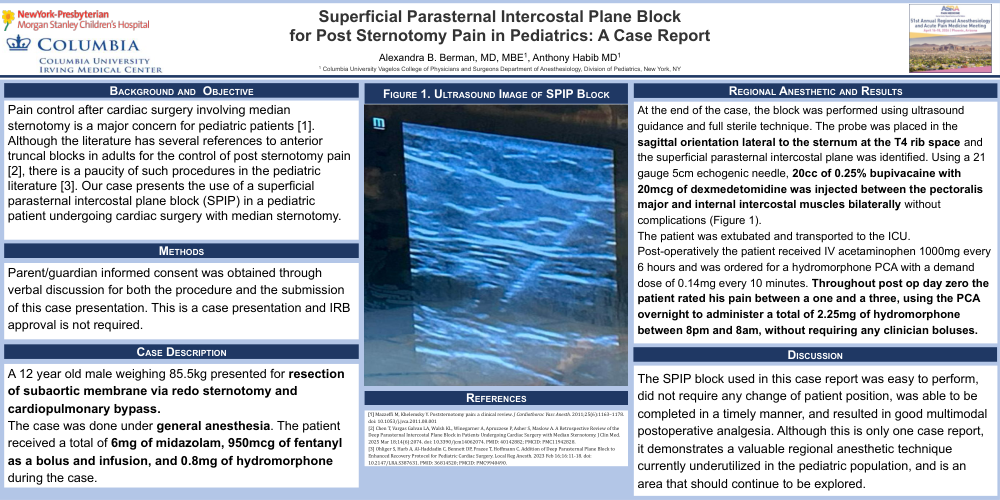
At the end of the case, the block was performed using ultrasound guidance and full sterile technique. The probe was placed in the sagittal orientation lateral to the sternum at the T4 rib space and the superficial parasternal intercostal plane was identified. Using a 21 gauge 5cm echogenic needle, 20cc of 0.25% bupivacaine with 20mcg of dexmedetomidine was injected between the pectoralis major and internal intercostal muscles bilaterally without complications (Figure 1).
The patient was extubated and transported to the ICU. Post-operatively the patient received IV acetaminophen 1000mg every 6 hours and was ordered for a hydromorphone PCA with a demand dose of 0.14mg every 10 minutes. Throughout post op day zero the patient rated his pain between a one and a three, using the PCA overnight to administer a total of 2.25mg of hydromorphone between 8pm and 8am, without requiring any clinician boluses.
Discussion
The SPIP block used in this case report was easy to perform, did not require any change of patient position, was able to be completed in a timely manner, and resulted in good multimodal postoperative analgesia. Although this is only one case report, it demonstrates a valuable regional anesthetic technique currently underutilized in the pediatric population, and is an area that should continue to be explored.