395 posters, 1 audios, 13 topics, 29 sessions, 1,056 authors, 461 institutions
ePostersLive by SciGen Technologies S.A. All rights reserved.
51st Annual Regional Anesthesiology and Acute Pain Medicine Meeting
April 16 - 18, 2026 | Phoenix, Arizona

2318520
Effects of Peripheral Nerve Stimulation on Acute and Chronic Amputation Patients
Poster Presenter
Authors
Affiliations
Part of Topic
Scientific Abstracts > Regional Anesthesia
Effects of Peripheral Nerve Stimulators in Peri-Operative and Chronic Amputation Pain Patients
INTRO
•Peripheral nerve stimulation (PNS) has evolved from permanently implanted systems to minimally invasive, temporary leads placed under ultrasound guidance.
•It offers a promising alternative for focal pain conditions, including perioperative pain.
•This study evaluates the efficacy of temporary PNS in reducing pain and improving quality of life in both acute and chronic post-amputation (defined as 60 days post-amputation) pain patients.
METHODS
•IRB-approved retrospective analysis at Penn State Hershey (2021-2024)
•67 patients total: 58 acute, 9 chronic (≥60 days post-amputation)
•Primary outcomes: Pain scores (NRS), quality of life, physical function, sleep
•Statistical analysis: Wilcoxon rank sum and chi-squared tests
RESULTS
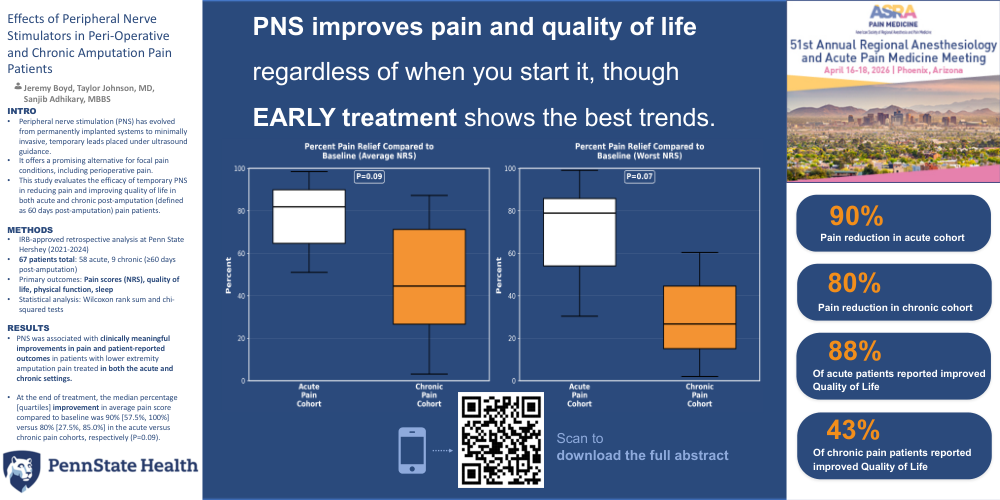
•PNS was associated with clinically meaningful improvements in pain and patient-reported outcomes in patients with lower extremity amputation pain treated in both the acute and chronic settings.
•At the end of treatment, the median percentage [quartiles] improvement in average pain score compared to baseline was 90% [57.5%, 100%] versus 80% [27.5%, 85.0%] in the acute versus chronic pain cohorts, respectively (P=0.09).
•Although patients treated in the acute postoperative period demonstrated numerically greater improvements across multiple outcomes, these differences did not reach statistical significance.
PNS improves pain and quality of life regardless of when you start it, though EARLY treatment shows the best trends.