395 posters, 1 audios, 13 topics, 29 sessions, 1,056 authors, 461 institutions
ePostersLive by SciGen Technologies S.A. All rights reserved.
51st Annual Regional Anesthesiology and Acute Pain Medicine Meeting
April 16 - 18, 2026 | Phoenix, Arizona

2316184
Preoperative opioid use is associated with higher complications after total knee arthroplasty
Poster Presenter
Part of Topic
Scientific Abstracts > Chronic Pain
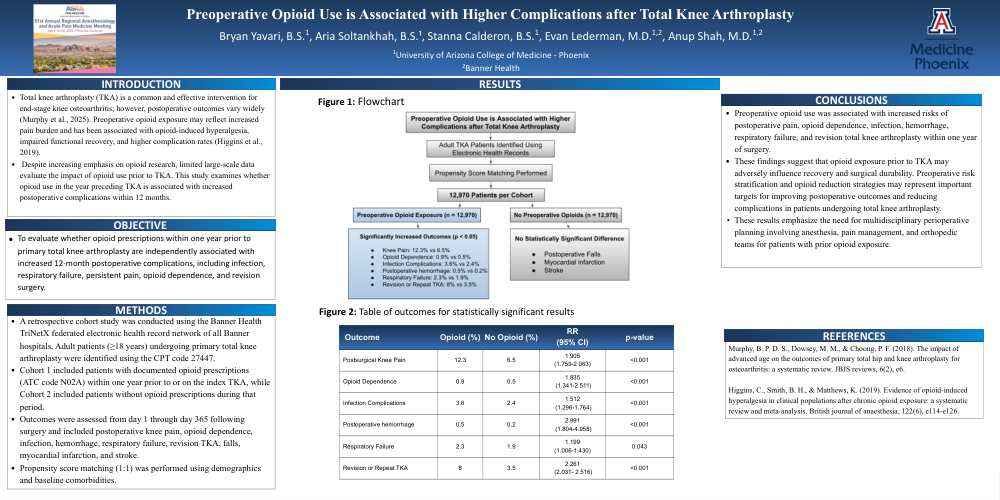
Total knee arthroplasty (TKA) is a common and effective intervention for end-stage knee osteoarthritis; however, postoperative outcomes vary widely (Murphy et al., 2025). Preoperative opioid exposure may reflect increased pain burden and has been associated with opioid-induced hyperalgesia, impaired functional recovery, and higher complication rates (Higgins et al., 2019). Despite increasing emphasis on opioid research, limited large-scale data evaluate the impact of opioid use prior to TKA. This study examines whether opioid use in the year preceding TKA is associated with increased postoperative complications within 12 months.
After propensity score matching, 12,970 patients remained in each cohort. Patients with preoperative opioid exposure demonstrated significantly higher rates of postprocedural knee pain compared with non opioid preoperative patients (12.3% vs 6.5%, p<0.001). Opioid dependence diagnosis within 12 months postoperatively was also more frequent among opioid-exposed patients (0.9% vs 0.5%, p<0.001). Infection complications occurred more commonly in the opioid group (3.6% vs 2.4%, p<0.001), and postoperative hemorrhage was significantly increased (0.5% vs 0.2%, p<0.001). Respiratory failure was statistically significant among patients with prior opioid use (2.3% vs 1.9%, p=0.043). Revision or repeat total knee arthroplasty occurred at a substantially higher rate in the opioid-exposed cohort (8.0% vs 3.5%, p<0.001). No statistically significant differences were observed between cohorts for postoperative falls, myocardial infarction, or stroke.