1,267 posters, 47 videos, 13 topics, 4 sessions, 853 authors
ePostersLive by SciGen Technologies S.A. All rights reserved.
SOHO 2026 Annual Meeting
September 9 - 12, 2026 | George R. Brown Convention Center, Houston, Texas

AML - 1321
Melatonin Enhances Venetoclax Sensitivity Through Modulation of Apoptotic and Resistance Pathways in Acute Myeloid Leukemia
Poster Presenter
Authors
Part of Topic
Acute Myeloid Leukemia (AML)
Melatonin Enhances Venetoclax Sensitivity Through Modulation of Apoptotic and Resistance Pathways in Acute Myeloid Leukemia
Vahid Vahedian¹˒², Keli Cristina de Lima¹, Bruna Oliveira de Almeida³, Rita de Cassia Cavaglieri¹,
João Agostinho Machado-Neto³ and Edurado Magalhães Rego¹˒²
1. Laboratory of Medical Research in Pathogenesis and Targeted Therapy in Onco-Immuno-Hematology (LIM-31), Division of Hematology and Hemotherapy,
Department of Clinical Medicine, Clinical Hospital, Faculty of Medicine, University of São Paulo (FMUSP), São Paulo, Brazil
2. DO’r Institute for Education and Research (IDOR), Department for Oncology and Hematology , São Paulo, Brazil
3. Department of Pharmacology, Institute of Biomedical Sciences (ICB), University of São Paulo (USP), São Paulo, Brazil
Introduction:
Venetoclax-based therapies have significantly improved outcomes in acute myeloid leukemia (AML), particularly in elderly or unfit patients. However, acquired
and intrinsic resistance mediated by antiapoptotic proteins and survival signaling pathways remains a major therapeutic challenge. Melatonin, a pleiotropic
indoleamine with experimentally documented antineoplastic and proapoptotic properties, has emerged as a potential novel adjuvant capable of modulating
mitochondrial apoptosis and overcoming therapy resistance.
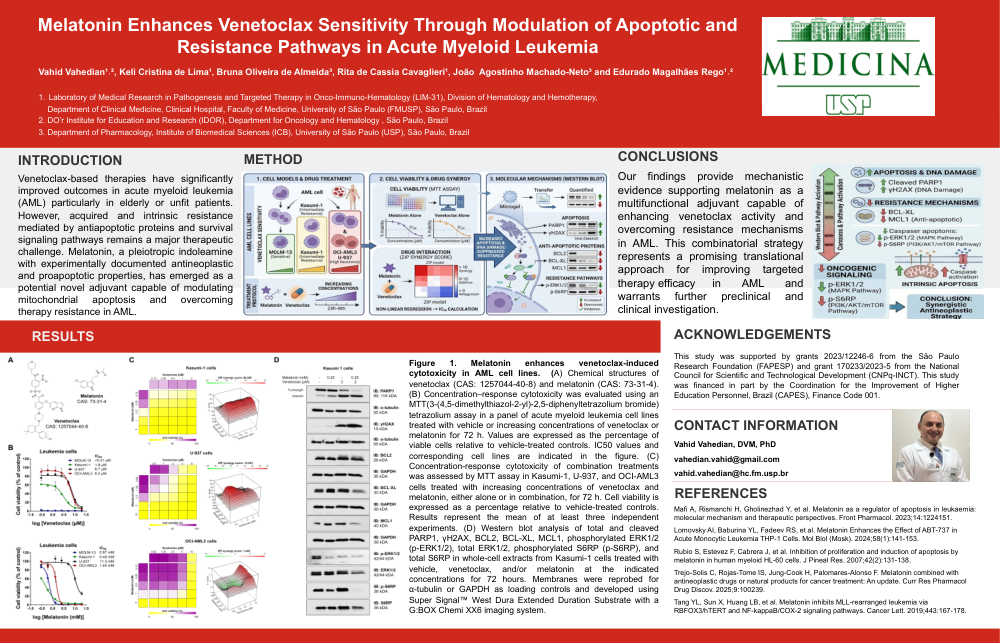
Figure1. Melatonin enhances venetoclax-induced cytotoxicity in AML cell lines.
(A) Chemical structures of venetoclax (CAS: 1257044-40-8) and melatonin (CAS: 73-31-4).
(B) Concentration–response cytotoxicity was evaluated using an MTT (3-(4,5-dimethylthiazol-2-yl)-2,5- diphenyltetrazolium bromide)
tetrazolium assay in a panel of acute myeloid leukemia cell lines treated with vehicle or increasing concentrations of venetoclax or melatonin for 72 h.
Values are expressed as the percentage of viable cells relative to vehicle-treated controls. IC50 values and corresponding cell lines are indicated in the figure.
(C) Concentration-response cytotoxicity of combination treatments was assessed
by MTT assay in Kasumi-1, U-937, and OCI-AML3 cells treated with increasing concentrations of venetoclax and melatonin, either alone or in combination,
for 72h. Cell viability is expressed as a percentage relative to vehicle-treated controls. Results represent the mean of at least three independent experiments.
(D) Western blot analysis of total and cleaved PARP1, γH2AX, BCL2, BCL-XL, MCL1, phosphorylated ERK1/2 (p-ERK1/2), total ERK1/2, phosphorylated S6RP
(p-S6RP) and total S6RP in whole-cell extracts from Kasumi-1 cells treated with vehicle, venetoclax, and/or melatonin at the indicated concentrations for 72 hours.
Membranes were reprobed for α-tubulin or GAPDH as loading controls and developed using SuperSignal™ West Dura Extended Duration Substrate with a G:BOX
Chemi XX6 imaging system.
Conclusion:
Our findings provide mechanistic evidence supporting melatonin as a multifunctional adjuvant capable of enhancing venetoclax activity and overcoming resistance
mechanisms in AML. This combinatorial strategy represents a promising translational approach for improving targeted therapy efficacy in AML and warrants further
preclinical and clinical investigation.
ACKNOWLEDGEMENTS
This study was supported by grants 2023/12246-6 from the São Paulo Research Foundation (FAPESP)
and grant 170233/2023-5 from the National Council for Scientific and Technological Development (CNPq-INCT).
This study was financed in part by the Coordination for the Improvement of Higher Education Personnel, Brazil (CAPES), Finance Code 001.
CONTACT INFORMATION
Vahid Vahedian, DVM, PhD
vahedian.vahid@gmail.com
vahid.vahedian@hc.fm.usp.br
REFERENCES
Mafi A, Rismanchi H, Gholinezhad Y, et al. Melatonin as a regulator of apoptosis in leukaemia:
molecular mechanism and therapeutic perspectives. Front Pharmacol. 2023;14:1224151.
Lomovsky AI, Baburina YL, Fadeev RS, et al. Melatonin Enhances the Effect of ABT-737 in
Acute Monocytic Leukemia THP-1 Cells. Mol Biol (Mosk). 2024;58(1):141-153.
Rubio S, Estevez F, Cabrera J, et al. Inhibition of proliferation and induction of apoptosis by
melatonin in human myeloid HL-60 cells. J Pineal Res. 2007;42(2):131-138.
Trejo-Solis C, Rojas-Tome IS, Jung-Cook H, Palomares-Alonso F. Melatonin combined with
antineoplastic drugs or natural products for cancer treatment: An update. Curr Res Pharmacol
Drug Discov. 2025;9:100239.
Tang YL, Sun X, Huang LB, et al. Melatonin inhibits MLL-rearranged leukemia via
RBFOX3/hTERT and NF-kappaB/COX-2 signaling pathways. Cancer Lett. 2019;443:167-178.