1,267 posters, 47 videos, 13 topics, 4 sessions, 853 authors
ePostersLive by SciGen Technologies S.A. All rights reserved.
SOHO 2026 Annual Meeting
September 9 - 12, 2026 | George R. Brown Convention Center, Houston, Texas

MPN - 469
Clinical Profile, Molecular Landscape, and Outcomes of Myelofibrosis in Lebanon: Real-World Data
Poster Presenter
Authors
Part of Topic
Myeloproliferative Neoplasms (MPN)
Title: Clinical Profile, Molecular Landscape, and Outcomes of Myelofibrosis in Lebanon: Real-World Data
Hiba Smaily1, Hiam Fakhreddine2, Nour Moukalled3, Jean El Cheikh3, Ali Bazarbachi3, Iman Abou Dalle3,*
Background: Myelofibrosis (MF) is a rare chronic myeloproliferative neoplasm with variable clinical presentations, heterogeneous molecular profiles, and significant symptom burden. Most existing knowledge derives from North American and European cohorts, with limited data from the Middle East. To address this gap and the growing need for specialized care, a dedicated MPN clinic was established at our center, prompting evaluation of patient profiles and outcomes.
Aims: To describe the clinical, molecular, and treatment characteristics of MF patients managed through a dedicated MPN clinic in Lebanon, and to evaluate treatment patterns, patient-reported experiences, and clinical outcomes in a real-world setting.
Methods: This study combined a retrospective electronic medical record analysis with a survey-based sub-study. Adult patients diagnosed with primary or secondary MF between December 2018 and December 2025 were identified. Clinical, molecular, laboratory, treatment, and outcome data were extracted using SPSS v26. A subset completed a validated questionnaire assessing quality of life, treatment adherence and availability, and the impact of the economic crisis on treatment. Survival analysis used Kaplan–Meier methods.
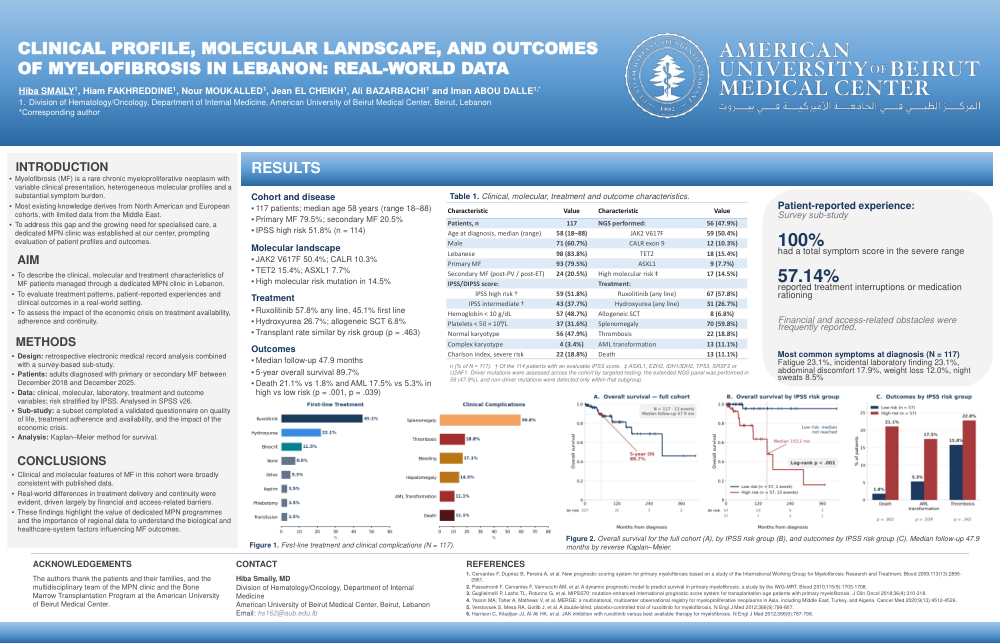
Results: The cohort included 117 patients (median age at diagnosis: 58 years). Most had primary MF (79.5%), and over half were classified as high-risk by DIPSS score. JAK2 was the most common driver mutation (50.4%); next-generation sequencing detected additional mutations including TET2 (18%) and ASXL1 (9%). Ruxolitinib was the most frequently used therapy (57.8%), followed by hydroxyurea (22.1%). Allogeneic stem cell transplantation was performed in 6.8% of patients. During follow-up (median 47.9 months; range 0.6–413.7), 11.1% developed acute myeloid leukemia and 11.1% died. The 5-year OS was approximately 89.7%. Symptom burden was substantial: all sub-study patients had a total symptom score classified as severe. Financial and access-related obstacles were frequently reported, with treatment interruptions and medication rationing described in 4 of 7 patients.
Conclusion: Clinical and molecular features of MF in this cohort were broadly consistent with published data, but real-world differences in treatment delivery and continuity were evident. These findings highlight the value of dedicated MPN programs and the importance of regional data to understand biological and healthcare system factors influencing MF outcomes.