1,267 posters, 47 videos, 13 topics, 4 sessions, 853 authors
ePostersLive by SciGen Technologies S.A. All rights reserved.
SOHO 2026 Annual Meeting
September 9 - 12, 2026 | George R. Brown Convention Center, Houston, Texas

CT - 243
Quality of Abstracts in Contemporary Hematology-Oncology Trials: A CONSORT Adherence Analysis of Over 15 Years
Poster Presenter
Authors
Part of Topic
Cellular Therapy (CT)
Quality of Abstracts in Contemporary Hematology-Oncology Trials: A CONSORT Adherence Analysis of Over 15 Years
AUTHORS
A. UR RAB¹, M. KHAN¹, M.F. HAMMAD¹, Z.S. KHOURY², S. KHALID¹, H. FARDOUN³, M.S. ABBAS⁴ and M. HAJEH⁵
¹ Foundation University Medical College, Islamabad, Pakistan
² University of Jordan, Amman, Jordan
³ Michigan State University College of Human Medicine, Grand Rapids, Michigan, USA
⁴ Aga Khan University, Karachi, Pakistan
⁵ Department of Internal Medicine, Southwest Healthcare Medical Education Consortium, Palmdale Regional Medical Center, California, USA
INTRODUCTION
Randomized controlled trials (RCTs) are a cornerstone of evidence-based medicine.¹
Physicians frequently rely on abstracts to rapidly assess a study’s relevance.²
Incomplete abstract reporting can limit critical appraisal and contribute to misinterpretation of trial findings.³
CONSORT Extension for Abstracts (CONSORT-A) provides standardized guidance for reporting RCT abstracts.⁴
No prior systematic study has evaluated CONSORT-A adherence in hematology-oncology RCT abstracts.
AIM
To evaluate adherence to CONSORT-A guidelines among RCTs published in major hematology-oncology journals from 2010-2026.
METHODS
Systematic MEDLINE search identified eligible RCTs.
Five major hematology-oncology journals were included:
(Blood, Lancet Haematology, Leukemia, Journal of Hematology and Oncology, and Blood Cancer Journal).
Total of 518 abstracts were analyzed.
Pre-specified 19-item CONSORT-A checklist was used to assess adherence.
Post-hoc, interim, and economic sub-analyses were excluded from the review.
Two blinded, independently trained investigators assessed the abstracts.
Discrepancies were resolved by a third investigator.
Chi-square goodness-of-fit test assessed adherence against the 70% threshold.
RESULTS
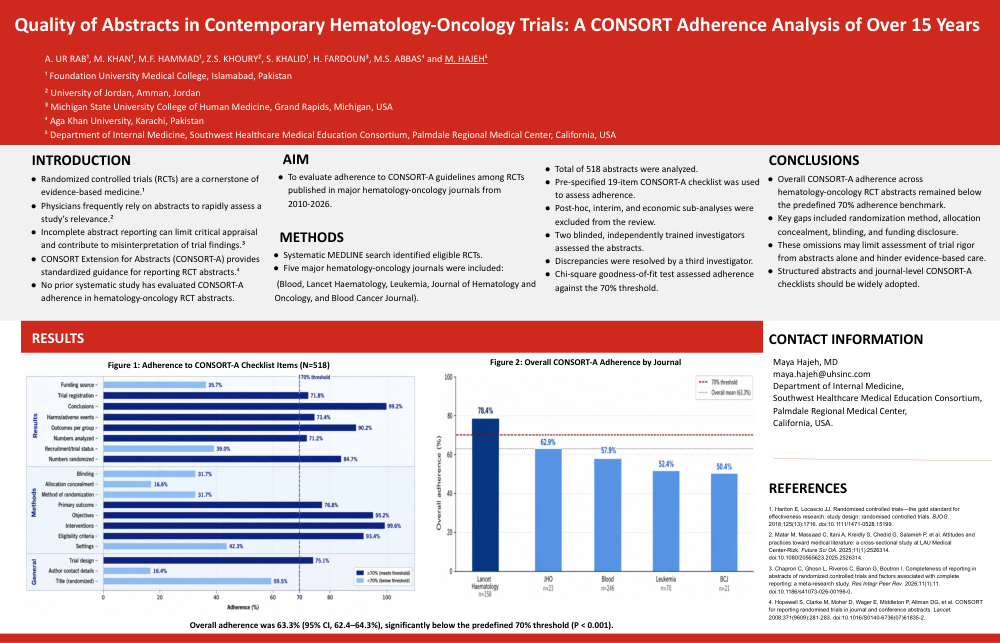
Figure 1: Adherence to CONSORT-A Checklist Items (N=518)
Figure 2: Overall CONSORT-A Adherence by Journal
Overall adherence was 63.3% (95% CI, 62.4–64.3%), significantly below the predefined 70% threshold (P < 0.001).
CONCLUSIONS
Overall CONSORT-A adherence across hematology-oncology RCT abstracts remained below the predefined 70% adherence benchmark.
Key gaps included randomization method, allocation concealment, blinding, and funding disclosure.
These omissions may limit assessment of trial rigor from abstracts alone and hinder evidence-based care.
Structured abstracts and journal-level CONSORT-A checklists should be widely adopted.
REFERENCES
- Hariton E, Locascio JJ. Randomised controlled trials—the gold standard for effectiveness research: study design: randomised controlled trials. BJOG. 2018;125(13):1716. doi:10.1111/1471-0528.15199.
- Matar M, Massaad C, Itani A, Kreidly S, Chedid G, Salameh P, et al. Attitudes and practices toward medical literature: a cross-sectional study at LAU Medical Center-Rizk. Future Sci OA. 2025;11(1):2526314. doi:10.1080/20565623.2025.2526314.
- Chapron C, Ghosn L, Riveros C, Baron G, Boutron I. Completeness of reporting in abstracts of randomized controlled trials and factors associated with complete reporting: a meta-research study. Res Integr Peer Rev. 2026;11(1):11. doi:10.1186/s41073-026-00196-0.
- Hopewell S, Clarke M, Moher D, Wager E, Middleton P, Altman DG, et al. CONSORT for reporting randomised trials in journal and conference abstracts. Lancet. 2008;371(9609):281-283. doi:10.1016/S0140-6736(07)61835-2.
CONTACT INFORMATION
Maya Hajeh, MD
maya.hajeh@uhsinc.com
Department of Internal Medicine,
Southwest Healthcare Medical Education Consortium,
Palmdale Regional Medical Center,
California, USA.