516 posters, 59 topics, 63 sessions, 1,127 authors, 353 institutions
ePostersLive by SciGen Technologies S.A. All rights reserved.
2026 SOAP Annual Meeting
April 29 - May 3, 2026 | Montreal, Quebec Canada

2341683
Impact and Anesthetic Considerations of Breast Cancer in the Pregnant Patient
Poster Presenter
Authors
Part of Topic
ONCOLOGY and NEUROMUSCULAR
Impact and Anesthetic Considerations of Breast Cancer in the Pregnant Patient
William C. Grant DO, Regina Fragneto MD, Stephen Ford DO, James Damron MD
University of Kentucky Albert B. Chandler Medical Center - Lexington, KY
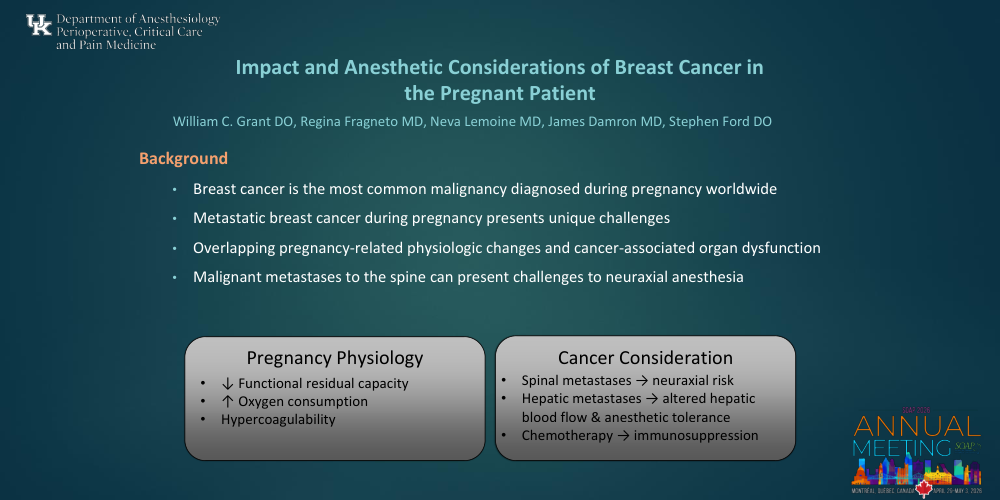
Breast cancer is the most common malignancy diagnosed during pregnancy worldwide. While many cases are detected at an early stage, some patients present or progress to stage IV disease. Metastatic breast cancer during pregnancy presents unique challenges for obstetric anesthesia mainly due to overlapping pregnancy-related physiologic changes and cancer-associated organ dysfunction. Bone and spinal metastases are particularly relevant to anesthetic planning because of their implications for the safety and feasibility of neuraxial anesthesia.
Stage IV breast cancer during pregnancy presents significant anesthetic challenges due to the combined effects of metastatic disease and pregnancy-related physiological changes.
Superimposed malignancy exacerbates risks through additional reductions in respiratory reserve, increases in metabolic deconditioning, anemia, nutritional derangements, and an increased risk of thromboembolism. GA requires meticulous airway planning to minimize the risk of hypoxemia and aspiration.
Careful risk assessment is necessary for initiation of neuraxial anesthesia in a patient with superimposed malignancy. Chemotherapy-induced immunosuppression increases the risk of epidural or spinal abscess. Patient comfort is also a concern as spinal metastases may cause significant pain when lying supine, even after neuraxial block. Metastatic disease can sometimes be associated with thrombocytopenia, further complicating the decision to use neuraxial anesthesia. Furthermore, metastatic spinal involvement increases the risk of anatomic disruption and injury from the epidural needle, potentially making general anesthesia a safer and more comfortable option.