516 posters, 59 topics, 63 sessions, 1,127 authors, 353 institutions
ePostersLive by SciGen Technologies S.A. All rights reserved.
2026 SOAP Annual Meeting
April 29 - May 3, 2026 | Montreal, Quebec Canada

2337603
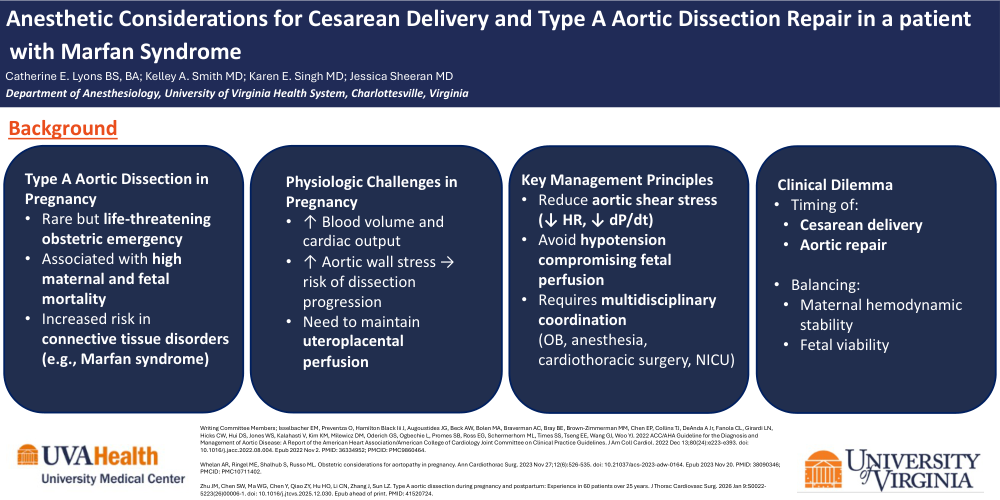
Anesthetic Considerations for Cesarean Delivery and Type A Aortic Dissection Repair in a patient with Marfan Syndrome
Poster Presenter
Authors
Affiliations
Part of Topic
Challenging Acuity
Acute type A aortic dissection in pregnancy presents a life-threatening, time-sensitive challenge requiring nuanced anesthetic planning to balance maternal hemodynamic stability with fetal viability. We describe the perioperative anesthetic management of a 23-year-old primigravida at 35 weeks’ gestation with Marfan syndrome, known aortic root and ascending aortic dilation, and sickle cell trait who presented with acute type A aortic dissection. On presentation, the patient was maintained on high-dose esmolol and nicardipine infusions, with intermittent labetalol boluses to achieve a target systolic blood pressure below 110 mmHg, emphasizing strict impulse control to minimize propagation of the dissection while supporting uteroplacental perfusion.1 Given the need for immediate surgical intervention, a combined cesarean delivery (CD) and ascending aortic dissection repair was undertaken. CD was completed prior to aortic surgery to account for the risks associated with fetal exposure to cardiopulmonary bypass (CPB) as well as the late gestational age, as supported by literature recommendations.2,3
Hemodynamic management prioritized heart rate control and avoidance of acute afterload increases throughout induction, delivery, and initiation of CPB. General anesthesia with rapid sequence induction was selected over neuraxial techniques to minimize aspiration risk in late pregnancy and to avoid sympathetic surges that could exacerbate acute aortic pathology.2 Prior to induction, invasive monitoring including arterial and central venous access, cerebral oximetry, BIS monitoring, and transesophageal echocardiography was established to enable tight heart rate and blood pressure control and guide management through anticipated physiologic changes associated with systemic anticoagulation and hypothermia. Continuous fetal monitoring was maintained until delivery, and vasoactive agents were carefully titrated to balance impulse control with preservation of uteroplacental perfusion.
Following delivery, full systemic anticoagulation for CPB and hypothermic circulatory arrest likely caused the substantial coagulopathy the patient developed in the immediate postpartum period, necessitating massive transfusion with red blood cells, plasma, platelets, and cryoprecipitate. Careful coordination with surgical, perfusion, and transfusion teams was critical throughout.
This case highlights key considerations for the obstetric anesthesiologist managing concurrent high-risk cardiovascular and obstetric pathology: impulse control, hemodynamic and echocardiographic monitoring, anticipation of hemorrhagic and coagulation challenges, and integrated multidisciplinary teamwork. These elements underscore the complexity of anesthetic care in combined cardiac and obstetric emergencies and offer educational value for practitioners in peripartum anesthesia.