875 posters, 25 topics, 3,440 authors, 1,061 institutions
ePostersLive by SciGen Technologies S.A. All rights reserved.
SAGES 2026 Annual Meeting Emerging Technology Session
March 25-28, 2026 | Tampa, FL, USA

P344
Percutaneous Cholecystostomy Tube Outcomes
Poster Presenter
Authors
Stephan Kim, Carolina Baz, Brittany Taylor, Alex Rasarmos, Becca Allen, Justin Turcotte, Naeem Newman
Affiliations
Part of Topic
Biliary
Outcomes and Predictors of Management Strategies Following Percutaneous Cholecystostomy for Acute Cholecystitis
Stephan Kim, DO; Carolina Baz, MD; Brittany Taylor, DO; Alex Rasarmos, DO; Rebecca Allen, MD; Justin Turcotte, PhD; Naeem Newman, MD
Introduction:
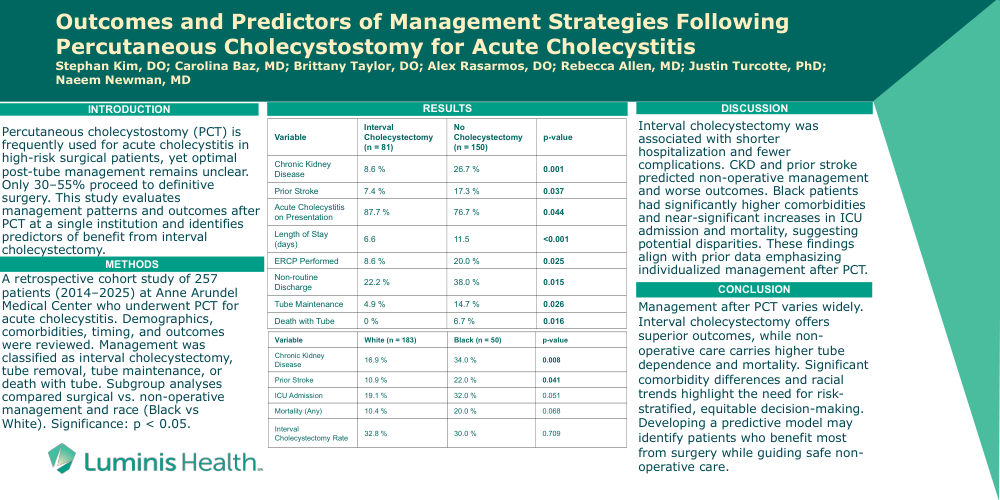
A retrospective cohort study of 257 patients (2014–2025) at Anne Arundel Medical Center who underwent PCT for acute cholecystitis. Demographics, comorbidities, timing, and outcomes were reviewed. Management was classified as interval cholecystectomy, tube removal, tube maintenance, or death with tube. Subgroup analyses compared surgical vs. non-operative management and race (Black vs White). Significance: p < 0.05.
Methods:
Percutaneous cholecystostomy (PCT) is frequently used for acute cholecystitis in high-risk surgical patients, yet optimal post-tube management remains unclear. Only 30–55% proceed to definitive surgery. This study evaluates management patterns and outcomes after PCT at a single institution and identifies predictors of benefit from interval cholecystectomy.
Discussion:
Interval cholecystectomy was associated with shorter hospitalization and fewer complications. CKD and prior stroke predicted non-operative management and worse outcomes. Black patients had significantly higher comorbidities and near-significant increases in ICU admission and mortality, suggesting potential disparities. These findings align with prior data emphasizing individualized management after PCT.
Conclusion:
Management after PCT varies widely. Interval cholecystectomy offers superior outcomes, while non-operative care carries higher tube dependence and mortality. Significant comorbidity differences and racial trends highlight the need for risk-stratified, equitable decision-making. Developing a predictive model may identify patients who benefit most from surgery while guiding safe non-operative care.