875 posters, 25 topics, 3,440 authors, 1,061 institutions
ePostersLive by SciGen Technologies S.A. All rights reserved.
SAGES 2026 Annual Meeting Emerging Technology Session
March 25-28, 2026 | Tampa, FL, USA

P335
Does Timing of Cholecystectomy for Acute Cholecystitis Affect Perioperative Outcomes? A Retrospective Study of 502 Patients
Poster Presenter
Part of Topic
Biliary
BACKGROUND:
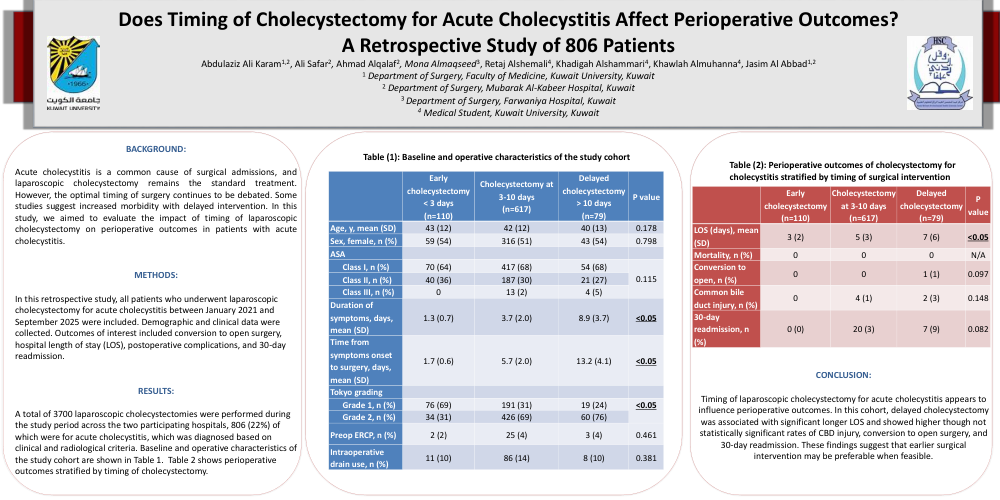
Acute cholecystitis is a common cause of surgical admissions, and laparoscopic cholecystectomy remains the standard treatment. However, the optimal timing of surgery continues to be debated. Some studies suggest increased morbidity with delayed intervention. In this study, we aimed to evaluate the impact of timing of laparoscopic cholecystectomy on perioperative outcomes in patients with acute cholecystitis.
METHODS:
In this retrospective study, all patients who underwent laparoscopic cholecystectomy for acute cholecystitis between January 2021 and September 2025 were included. Demographic and clinical data were collected. Outcomes of interest included conversion to open surgery, hospital length of stay (LOS), postoperative complications, and 30-day readmission.
RESULTS:
A total of 3700 laparoscopic cholecystectomies were performed during the study period across the two participating hospitals, 806 (22%) of which were for acute cholecystitis, which was diagnosed based on clinical and radiological criteria. Baseline and operative characteristics of the study cohort are shown in Table 1. Table 2 shows perioperative outcomes stratified by timing of cholecystectomy.
CONCLUSION:
Timing of laparoscopic cholecystectomy for acute cholecystitis appears to influence perioperative outcomes. In this cohort, delayed cholecystectomy was associated with significant longer LOS and showed higher though not statistically significant rates of CBD injury, conversion to open surgery, and 30-day readmission. These findings suggest that earlier surgical intervention may be preferable when feasible.