197 posters, 15 videos, 1 topics, 31 sessions, 509 authors
ePostersLive by SciGen Technologies S.A. All rights reserved.
2026 AO Annual Meeting
Conference ePosters

P22
Impact of Concave Intaglio Geometry on Marginal Bone Loss and Microbial Colonization in Full-arch Implant-supported Prostheses
Poster Presenter
Part of Topic
Background:
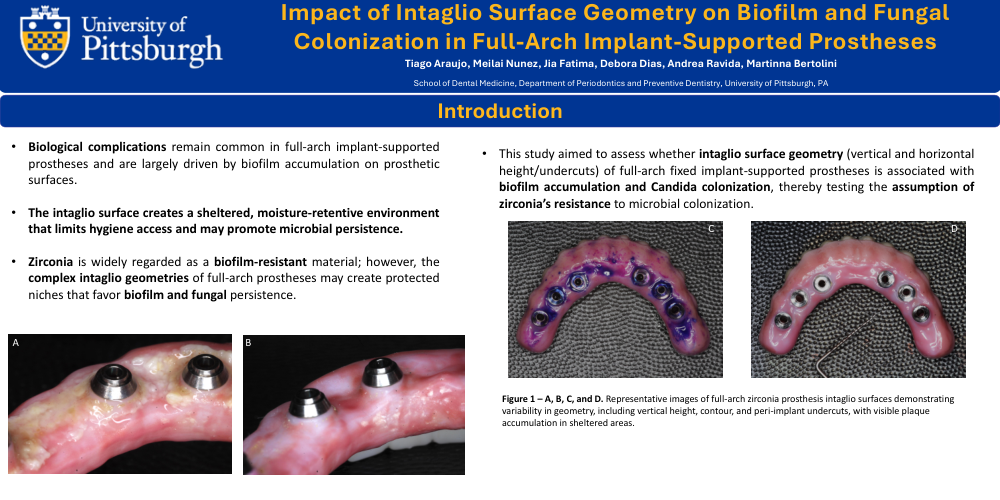
Biofilm-related complications remain common in full-arch implant-supported prostheses. Although zirconia is considered relatively biofilm-resistant, complex intaglio surface geometry may create protected microbial niches.
Objective:
To evaluate the association between intaglio surface geometry, biofilm accumulation, and Candida colonization in full-arch implant-supported prostheses.
Methods:
Prostheses in function for ≥12 months were removed, disclosed, and digitally analyzed for biofilm coverage. Biofilm samples were cultured to detect Candida. Bacterial and fungal loads were analyzed at prosthesis and patient levels.
Results & Conclusions:
Bacterial loads exceeded fungal loads across both arches. Candida colonization was heterogeneous and not arch-dependent, suggesting microbial ecology is driven by localized prosthetic microenvironments rather than plaque quantity.
Keywords: full-arch implant prosthesis; intaglio surface; biofilm; Candida albicans; zirconia; PMMA; peri-implant mucositis; peri-implantitis