197 posters, 15 videos, 1 topics, 31 sessions, 509 authors
ePostersLive by SciGen Technologies S.A. All rights reserved.
2026 AO Annual Meeting
Conference ePosters

P132
The Role of GPRC6A Activated by Osteocalcin in Pancreatic Cancer and the Tumor Microenvironment
Poster Presenter
Part of Topic
Pancreatic cancer is one of the leading causes of cancer-related death in the worldwide, and is characterized by difficulties in early detection, diagnosis, and poor prognosis. Recent studies have demonstrated that adipocytes in the tumor microenvironment play a critical role in pancreatic cancer progression. These cancer-associated adipocytes (CAAs) promote tumor growth and invasion by undergoing phenotypic changes, including enhanced lipolysis, secretion of inflammatory cytokines, and differentiation into fibroblast-like cells.
We have researched the effects of osteocalcin(OC), a non-collagenous bone protein, on the function of adipocytes so far.
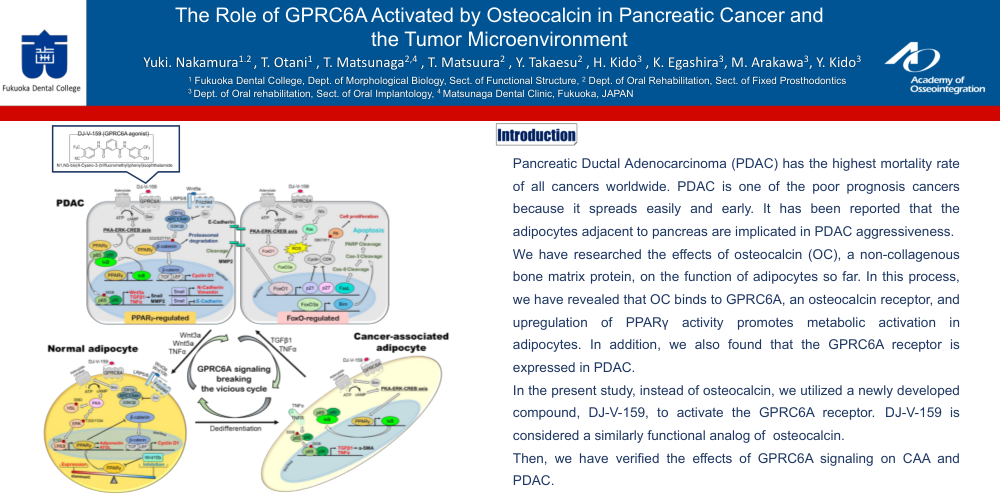
Our previous studies have shown that OC signaling through the G protein–coupled receptor GPRC6A enhances intracellular cAMP levels, activates PKA and downstream ERK signaling, and promotes activation of transcription factors such as CREB, leading to upregulation of PPARγ and FoxO1 in adipocytes. These signaling pathways stimulate lipid metabolism and regulate adipocyte differentiation and function.
In this study, we are the first to focus on and demonstrate the association between pancreatic cancer and GPRC6A signaling by osteocalcin.
This study will provide novel mechanistic insights into adipocyte–cancer cell interactions and may identify GPRC6A signaling as a potential therapeutic target for pancreatic cancer.