226 posters, 5 topics, 20 sessions, 598 authors, 292 institutions
ePostersLive by SciGen Technologies S.A. All rights reserved.
Obstetric Anaesthesia Annual Scientific Meeting 2026
14-15 May 2026 | Liverpool Convention Centre

7163788
From variation to consistency: regional collaboration to develop standardised referral criteria for anaesthetic high-risk clinics
Part of Topic
Service Evaluation
Introduction
High-risk anaesthetic clinics (HRAC) are well established within obstetric services, with timely review of referrals from the multidisciplinary team (MDT) essential for optimal antenatal care [1]. Variation in referral criteria may cause unnecessary clinic visits for some women or fail to identify others who would benefit from anaesthetic counselling. This is compounded by frequent rotation of staff across the region, creating uncertainty around appropriate referral criteria. This service review aimed to develop standardised referral criteria for HRACs across a regional network.
Methodology
Anaesthetic clinic service leads from all five hospital Trusts in our region formed a focus group to identify and explore areas of inconsistency in HRAC referral practice. Discussions were formally documented and analysed to determine areas of agreement and recurring themes of variation.
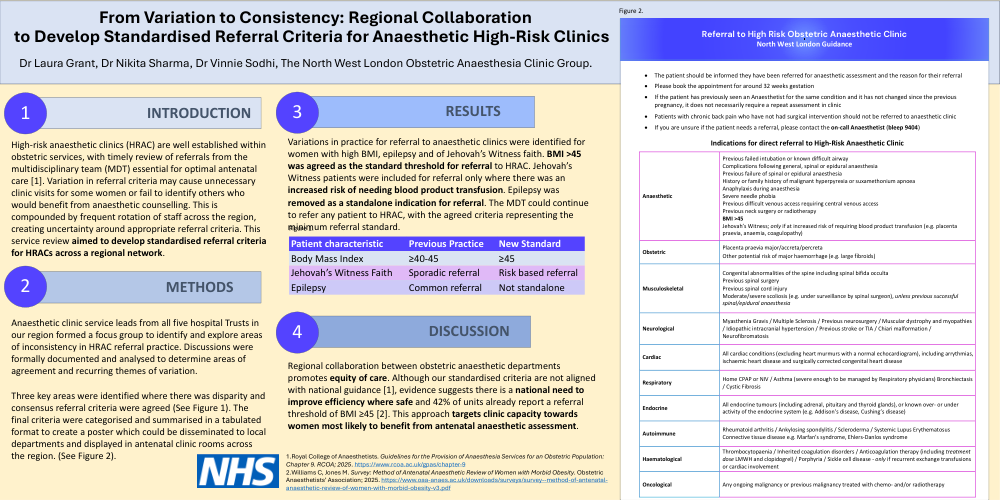
Three key areas were identified where there was disparity and consensus referral criteria were agreed (See Figure 1). The final criteria were categorised and summarised in a tabulated format to create a poster which could be disseminated to local departments and displayed in antenatal clinic rooms across the region. (See Figure 2).
Results
Variations in practice for referral to anaesthetic clinics were identified for women with high BMI, epilepsy and of Jehovah’s Witness faith. BMI >45 was agreed as the standard threshold for referral to HRAC. Jehovah’s Witness patients were included for referral only where there was an increased risk of needing blood product transfusion. Epilepsy was removed as a standalone indication for referral. The MDT could continue to refer any patient to HRAC, with the agreed criteria representing the minimum referral standard.
Discussion
Regional collaboration between obstetric anaesthetic departments promotes equity of care. Although our standardised criteria are not aligned with national guidance [1], evidence suggests there is a national need to improve efficiency where safe and 42% of units already report a referral threshold of BMI ≥45 [2]. This approach targets clinic capacity towards women most likely to benefit from antenatal anaesthetic assessment.
References
-
Royal College of Anaesthetists. Guidelines for the Provision of Anaesthesia Services for an Obstetric Population: Chapter 9. RCOA; 2025. https://www.rcoa.ac.uk/gpas/chapter-9
-
Williams C, Jones M. Survey: Method of Antenatal Anaesthetic Review of Women with Morbid Obesity. Obstetric Anaesthetists’ Association; 2025. https://www.oaa-anaes.ac.uk/downloads/surveys/survey--method-of-antenatal-anaesthetic-review-of-women-with-morbid-obesity-v3.pdf