226 posters, 5 topics, 20 sessions, 598 authors, 292 institutions
ePostersLive by SciGen Technologies S.A. All rights reserved.
Obstetric Anaesthesia Annual Scientific Meeting 2026
14-15 May 2026 | Liverpool Convention Centre

7162724
Peripartum management of congenital SEPN1 muscular dystrophy and rigid spine syndrome
Poster Presenter
Authors
Affiliations
Part of Topic
Case report
Abstract ID: 7162724
Peripartum management of congenital SEPN1 muscular dystrophy and rigid spine syndrome
Introduction
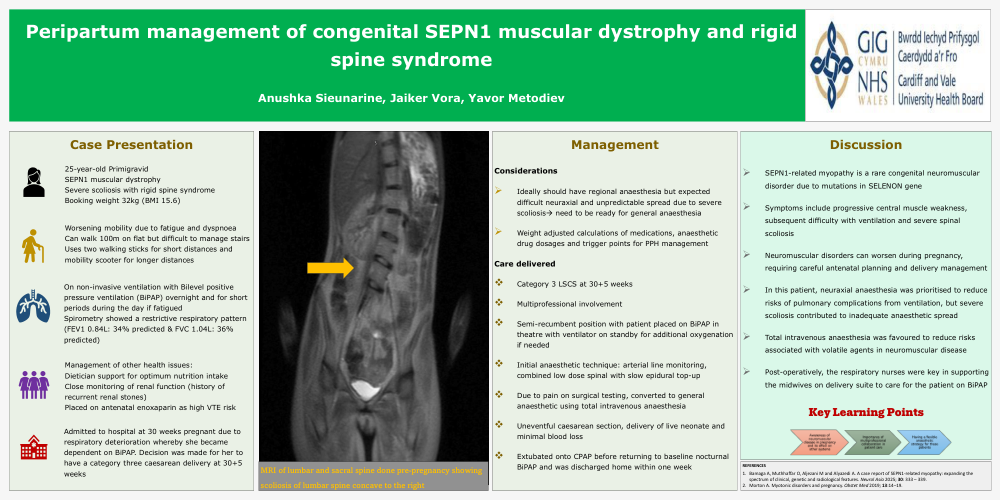
SEPN1-related myopathies encompass a rare subset of congenital neuromuscular disorders resulting from mutations in the SELENON gene, often presenting in infancy with symptoms of progressive central muscle weakness, subsequent difficulty with ventilation and severe spinal scoliosis. There is limited literature describing peripartum anaesthetic management of SEPN1-related muscular dystrophy [1]. This case highlights the challenges posed by these patients due to the risk of respiratory deterioration from increased physiological demand and difficulties of neuraxial and general anaesthesia.
Case Report
We report a 25-year-old primigravid woman with SEPN1 muscular dystrophy, rigid spine syndrome with severe scoliosis and restrictive lung disease requiring long-term non-invasive ventilation (NIV) with bilevel positive airway pressure (BiPAP). Her booking weight was 35 kg, and she experienced worsening breathlessness during pregnancy, requiring prolonged daytime NIV use. At 30 weeks gestational age, she was admitted to hospital due to respiratory deterioration, whereby she became BiPaP dependent. A category 3 caesarean birth was performed at 30+5 weeks with multiprofessional involvement including dual consultant anaesthetic and obstetric teams, intensive care and NIV specialists. Advanced anaesthetic techniques included arterial line monitoring, combined spinal-epidural and NIV support. Despite an apparently adequate neuraxial block, she reported pain on surgical testing and general anaesthesia was performed using total intravenous anaesthesia. Caesarean birth was uneventful with delivery of a live neonate and minimal blood loss. She was extubated onto CPAP before returning to baseline nocturnal BiPAP and was discharged home within one week.
Discussion
Neuromuscular disorders can worsen during pregnancy, requiring careful antenatal surveillance and delivery planning, particularly where severe restrictive lung disease is present [2]. This is best managed with a multiprofessional approach including respiratory specialists and NIV nursing team. In this case, neuraxial anaesthesia was prioritised to reduce the pulmonary risks associated with post-operative ventilation, but severe spinal deformity contributed to unpredictable neuraxial spread and early conversion to general anaesthesia. Successful maternal and neonatal outcomes were supported by early multidisciplinary planning, intra-operative respiratory support and a flexible anaesthetic strategy.
References
1. Bamaga A, Muthhaffar O, Aljezani M and Alyazedi A. A case report of SEPN1-related myopathy: expanding the spectrum of clinical, genetic and radiological features. Neurol Asia 2025; 30: 333 – 339.
2. Morton A. Myotonic disorders and pregnancy. Obstet Med 2019; 13:14–19.