226 posters, 5 topics, 20 sessions, 598 authors, 292 institutions
ePostersLive by SciGen Technologies S.A. All rights reserved.
Obstetric Anaesthesia Annual Scientific Meeting 2026
14-15 May 2026 | Liverpool Convention Centre

7162490
Paramyotonia congenita in pregnancy: anaesthetic planning for a rare sodium channelopathy
Poster Presenter
Authors
Affiliations
Part of Topic
Case report
Introduction: Paramyotonia congenita is a rare skeletal muscle channelopathy caused by mutations in the SCN4A sodium channel gene. It is characterised by paradoxical myotonia, where muscle stiffness worsens with repeated activity and exposure to cold. Perioperative management is challenging due to temperature
Case report: A 34-year-old primigravida with known paramyotonia congenita (PMC) was reviewed antenatally for delivery planning. Her symptoms included cold-, pain- and exercise-induced myotonia affecting the upper limbs and oropharyngeal muscles, with a history of prior uneventful general anaesthesia before diagnosis. Early epidural analgesia was planned, with a general anaesthesia contingency plan including avoidance of suxamethonium and anticholinesterases
Labour was induced at 37+6 weeks for fetal growth restriction. During labour, she developed increased myotonic cramping involving the neck and upper limbs with transient dysphagia. An epidural catheter was sited early without complication and provided effective analgesia. She subsequently underwent a category 2 caesarean section under epidural top-up.
Perioperative management focused on strict normothermia and electrolyte monitoring. No perioperative myotonic or neurological complications occurred sensitivity, risk of myotonic crises and potential airway involvement.
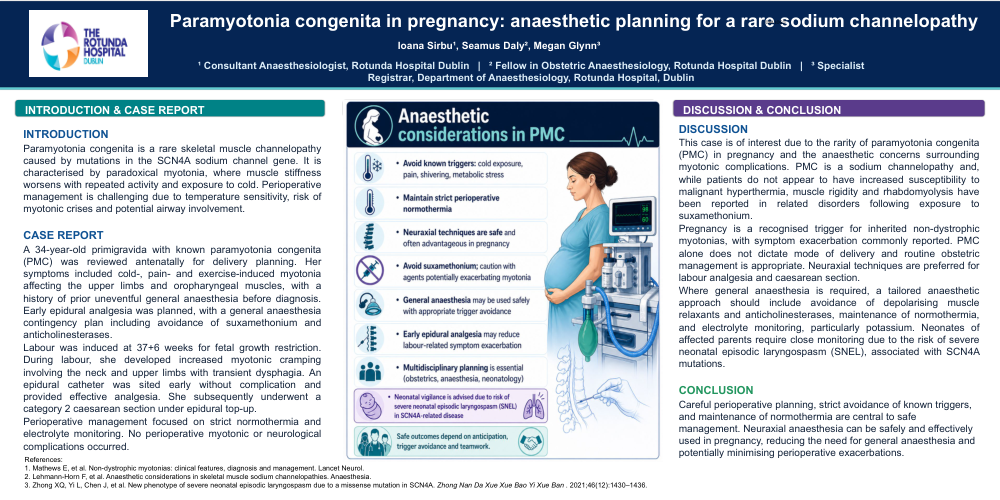
Discussion:This case is of interest due to the rarity of paramyotonia congenita (PMC) in pregnancy and the anaesthetic concerns surrounding myotonic complications. PMC is a sodium channelopathy and, while patients do not appear to have increased susceptibility to malignant hyperthermia,muscle rigidity and rhabdomyolysis have been reported in related disorders following exposure to suxamethonium. Pregnancy is a recognised trigger for inherited non-dystrophic myotonias, with symptom exacerbation commonly reported. PMC alone does not dictate mode of delivery and routine obstetric management is appropriate. Neuraxial techniques are preferred for labour analgesia and caesarean section. Where general anaesthesia is required, a tailored anaesthetic approach should include avoidance of depolarising muscle relaxants and anticholinesterases, maintenance of normothermia, and electrolyte monitoring, particularly potassium. Neonates of affected parents require close monitoring due to the risk of severe neonatal episodic laryngospasm (SNEL), associated with SCN4A mutations.
Conclusion: Careful perioperative planning, strict avoidance of known triggers, and maintenance of normothermia are central to safe management. Neuraxial anaesthesia can be safely and effectively used in pregnancy, reducing the need for general anaesthesia and potentially minimising perioperative exacerbations.