226 posters, 5 topics, 20 sessions, 598 authors, 292 institutions
ePostersLive by SciGen Technologies S.A. All rights reserved.
Obstetric Anaesthesia Annual Scientific Meeting 2026
14-15 May 2026 | Liverpool Convention Centre

7159420
Complex care requires complex metrics: evaluating out-of-hours obstetric anaesthetic workload intensity in a tertiary unit.
Poster Presenter
Part of Topic
Service Evaluation
Background
Workload intensity and fatigue are recognised patient safety determinants1. Tertiary maternity units manage complex maternal comorbidity out of hours (OOH) in which workload may not be adequately represented by procedural activity alone2. This service evaluation aimed to capture OOH obstetric anaesthetic workload intensity within a UK tertiary maternity unit, examine its relationship to standard activity metrics and assess the impact of a role‑clarification intervention.
Methodology
A prospective evaluation was conducted across two four‑week periods. Structured surveys were completed by resident obstetric anaesthetists for all OOH shifts. Data included theatre cases, neuraxial procedures, use of a second theatre, requirement for additional anaesthetists, epidural response times, missed contractual rest breaks, and additional hours worked. Workload intensity was rated using a workload scale replicating that of the annual GMC survey. Free‑text responses provided qualitative insights into hidden complexity. Following the first period, an intervention clarified responsibilities between the duty anaesthetist and second anaesthetist, after which data collection was repeated.
Results
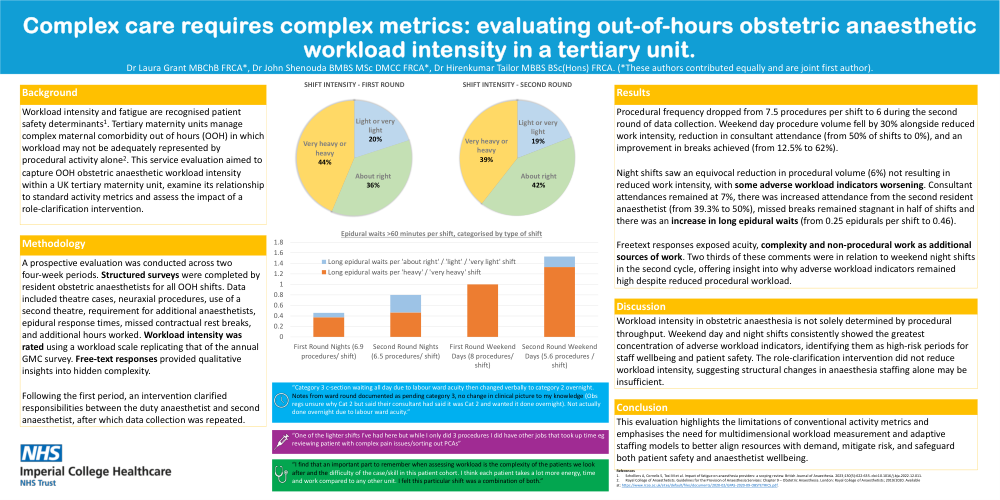
Procedural frequency dropped from 7.5 procedures per shift to 6 during the second round of data collection. Weekend day procedure volume fell by 30% alongside reduced work intensity, reduction in consultant attendance (from 50% of shifts to 0%), and an improvement in breaks achieved (from 12.5% to 62%).
Night shifts saw an equivocal reduction in procedural volume (6%) not resulting in reduced work intensity, with some adverse workload indicators worsening. Consultant attendances remained at 7%, there was increased attendance from the second resident anaesthetist (from 39.3% to 50%), missed breaks remained stagnant in half of shifts and there was an increase in long epidural waits (from 0.25 epidurals per shift to 0.46).
Freetext responses exposed acuity, complexity and non-procedural work as additional sources of work. Two thirds of these comments were in relation to weekend night shifts in the second cycle, offering insight into why adverse workload indicators remained high despite reduced procedural workload.
Discussion
Workload intensity in obstetric anaesthesia is not solely determined by procedural throughput. Weekend day and night shifts consistently showed the greatest concentration of adverse workload indicators, identifying them as high‑risk periods for staff wellbeing and patient safety. The role‑clarification intervention did not reduce workload intensity, suggesting structural changes in anaesthesia staffing alone may be insufficient.
Conclusion
This evaluation highlights the limitations of conventional activity metrics and emphasises the need for multidimensional workload measurement and adaptive staffing models to better align resources with demand, mitigate risk, and safeguard both patient safety and anaesthetist wellbeing.
References
1. Scholliers A, Cornelis S, Tosi M et al. Impact of fatigue on anaesthesia providers: a scoping review. British Journal of Anaesthesia. 2023;130(5):622-635. doi:10.1016/j.bja.2022.12.011.
2. Royal College of Anaesthetists. Guidelines for the Provision of Anaesthesia Services: Chapter 9 – Obstetric Anaesthesia. London: Royal College of Anaesthetists; 2019/2020. Available at: https://www.rcoa.ac.uk/sites/default/files/documents/2020-02/GPAS-2020-09-OBSTETRICS.pdf.