301 posters, 50 videos, 13 topics, 13 sessions, 734 authors, 193 institutions
ePostersLive by SciGen Technologies S.A. All rights reserved.
ISMICS 2026 Annual Meeting
10 - 13 June, 2026 | Miami, Florida

D99
Body Mass Index And Outcomes After Minimally Invasive Aortic Valve Replacement: A 15-year Retrospective Cohort Analysis
Part of Topic
Valve � Surgical Valves
Body Mass Index and Outcomes After Minimally Invasive Aortic Valve Replacement: A 15-Year Retrospective Cohort Analysis
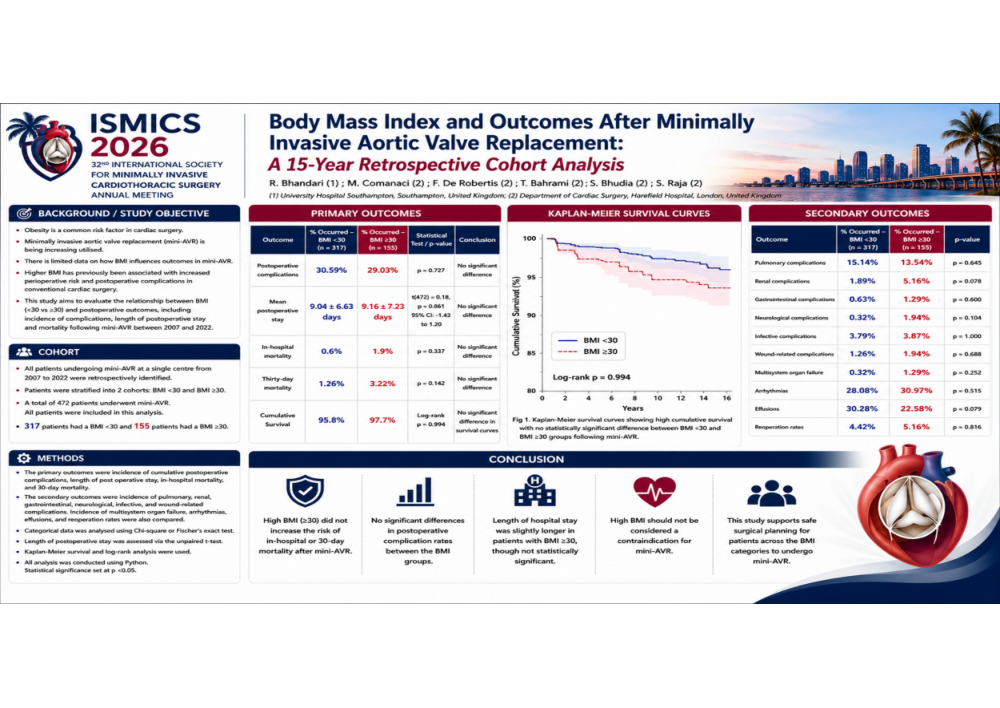
This retrospective single-centre cohort study evaluated the impact of body mass index (BMI) on postoperative outcomes following minimally invasive aortic valve replacement (mini-AVR) between 2007 and 2022. A total of 472 patients were included and stratified into BMI <30 and BMI ≥30 groups. Primary outcomes included postoperative complications, length of hospital stay, in-hospital mortality, and 30-day mortality. Secondary outcomes included pulmonary, renal, gastrointestinal, neurological, infective, wound-related complications, arrhythmias, effusions, multisystem organ failure, and reoperation rates. No statistically significant differences were observed between BMI groups in mortality, complication rates, postoperative stay, or cumulative survival. These findings support the safety and feasibility of minimally invasive AVR across BMI categories and suggest that elevated BMI should not be considered a contraindication to mini-AVR.
Keywords: minimally invasive aortic valve replacement, mini-AVR, body mass index, obesity, cardiac surgery, minimally invasive cardiac surgery, aortic valve surgery, postoperative outcomes, retrospective cohort study, survival analysis.