395 posters, 1 audios, 13 topics, 29 sessions, 1,056 authors, 461 institutions
ePostersLive by SciGen Technologies S.A. All rights reserved.
51st Annual Regional Anesthesiology and Acute Pain Medicine Meeting
April 16 - 18, 2026 | Phoenix, Arizona

2312334
Neuraxial Anesthesia Access and Maternal Mortality: A Regional Anesthesia—Focused Analysis from Southern California
Poster Presenter
Authors
Affiliations
Part of Topic
Scientific Abstracts > Regional Anesthesia
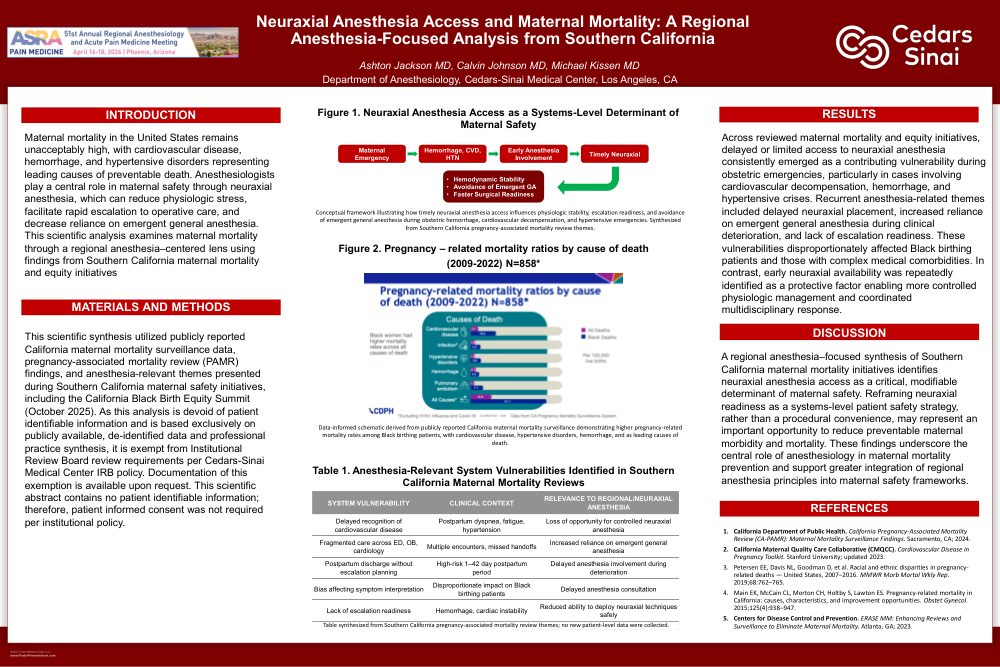
Maternal mortality in the United States remains unacceptably high, with cardiovascular disease, hemorrhage, and hypertensive disorders representing leading causes of preventable death. Anesthesiologists play a central role in maternal safety through neuraxial anesthesia, which can reduce physiologic stress, facilitate rapid escalation to operative care, and decrease reliance on emergent general anesthesia. This scientific analysis examines maternal mortality through a regional anesthesia–centered lens using findings from Southern California maternal mortality and equity initiatives
This scientific synthesis utilized publicly reported California maternal mortality surveillance data, pregnancy-associated mortality review (PAMR) findings, and anesthesia-relevant themes presented during Southern California maternal safety initiatives, including the California Black Birth Equity Summit (October 2025). As this analysis is devoid of patient identifiable information and is based exclusively on publicly available, de-identified data and professional practice synthesis, it is exempt from Institutional Review Board review requirements per Cedars-Sinai Medical Center IRB policy. Documentation of this exemption is available upon request. This scientific abstract contains no patient identifiable information; therefore, patient informed consent was not required per institutional policy.
Across reviewed maternal mortality and equity initiatives, delayed or limited access to neuraxial anesthesia consistently emerged as a contributing vulnerability during obstetric emergencies, particularly in cases involving cardiovascular decompensation, hemorrhage, and hypertensive crises. Recurrent anesthesia-related themes included delayed neuraxial placement, increased reliance on emergent general anesthesia during clinical deterioration, and lack of escalation readiness. These vulnerabilities disproportionately affected Black birthing patients and those with complex medical comorbidities. In contrast, early neuraxial availability was repeatedly identified as a protective factor enabling more controlled physiologic management and coordinated multidisciplinary response.
A regional anesthesia–focused synthesis of Southern California maternal mortality initiatives identifies neuraxial anesthesia access as a critical, modifiable determinant of maternal safety. Reframing neuraxial readiness as a systems-level patient safety strategy—rather than a procedural convenience—may represent an important opportunity to reduce preventable maternal morbidity and mortality. These findings underscore the central role of anesthesiology in maternal mortality prevention and support greater integration of regional anesthesia principles into maternal safety frameworks.
1.California Department of Public Health. California Pregnancy-Associated Mortality Review (CA-PAMR): Maternal Mortality Surveillance Findings. Sacramento, CA; 2024.
2.California Maternal Quality Care Collaborative (CMQCC). Cardiovascular Disease in Pregnancy Toolkit. Stanford University; updated 2023.
3.Petersen EE, Davis NL, Goodman D, et al. Racial and ethnic disparities in pregnancy-related deaths — United States, 2007–2016. MMWR Morb Mortal Wkly Rep. 2019;68:762–765.
4.Main EK, McCain CL, Morton CH, Holtby S, Lawton ES. Pregnancy-related mortality in California: causes, characteristics, and improvement opportunities. Obstet Gynecol. 2015;125(4):938–947.
5.Centers for Disease Control and Prevention. ERASE MM: Enhancing Reviews and Surveillance to Eliminate Maternal Mortality. Atlanta, GA; 2023.