395 posters, 1 audios, 13 topics, 29 sessions, 1,056 authors, 461 institutions
ePostersLive by SciGen Technologies S.A. All rights reserved.
51st Annual Regional Anesthesiology and Acute Pain Medicine Meeting
April 16 - 18, 2026 | Phoenix, Arizona

2317294
Redefining Analgesia in Burn Care: Bilateral Brachial Plexus Regional Anesthesia for Enzymatic Debridement
Part of Topic
Medically Challenging Cases
Pain control for bilateral hand burns requiring enzymatic debridement is challenging due to severe procedural pain and prolonged exposure1. Systemic opioids and general anesthesia are commonly used but are not without risks in burn patients2. Bilateral brachial plexus blockade is traditionally avoided because of systematic toxicity and respiratory safety concerns3. This case demonstrates how ultrasound-guided bilateral brachial plexus regional anesthesia can safely provide effective, opioid-sparing analgesia, redefining its role in complex burn care.
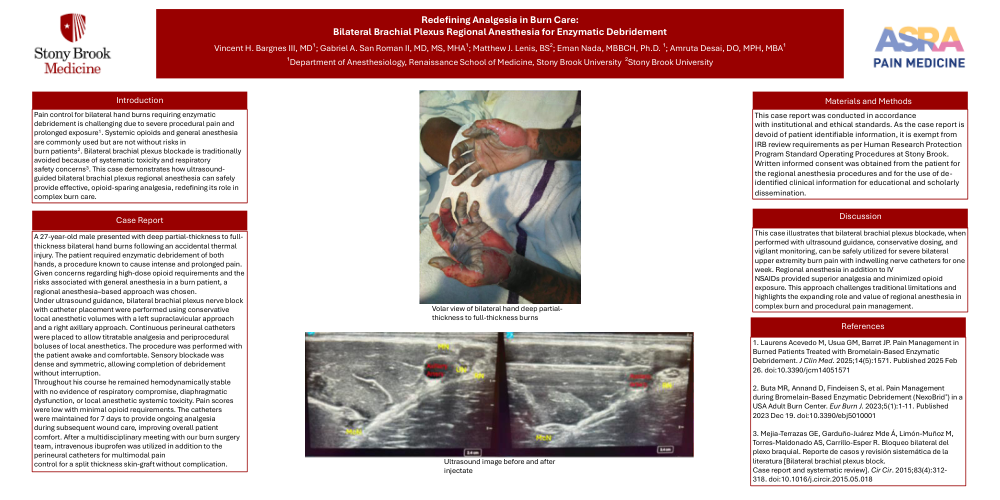
A 27-year-old male presented with deep partial-thickness to full-thickness bilateral hand burns following an accidental thermal injury. The patient required enzymatic debridement of both hands, a procedure known to cause intense and prolonged pain. Given concerns regarding high-dose opioid requirements and the risks associated with general anesthesia in a burn patient, a regional anesthesia–based approach was chosen.
Under ultrasound guidance, bilateral brachial plexus nerve block with catheter placement were performed using conservative local anesthetic volumes with a left supraclavicular approach and a right axillary approach. Continuous perineural catheters were placed to allow titratable analgesia and periprocedural boluses of local anesthetics. The procedure was performed with the patient awake and comfortable. Sensory blockade was dense and symmetric, allowing completion of debridement without interruption.
Throughout his course he remained hemodynamically stable with no evidence of respiratory compromise, diaphragmatic dysfunction, or local anesthetic systemic toxicity. Pain scores were low with minimal opioid requirements. The catheters were maintained for 7 days to provide ongoing analgesia during subsequent wound care, improving overall patient comfort. After a multidisciplinary meeting with our burn surgery team, intravenous ibuprofen was utilized in addition to the perineural catheters for multimodal pain control for a split thickness skin-graft without complication.
This case illustrates that bilateral brachial plexus blockade, when performed with ultrasound guidance, conservative dosing, and vigilant monitoring, can be safely utilized for severe bilateral upper extremity burn pain with indwelling nerve catheters for one week. Regional anesthesia in addition to IV NSAIDs provided superior analgesia and minimized opioid exposure. This approach challenges traditional limitations and highlights the expanding role and value of regional anesthesia in complex burn and procedural pain management.