395 posters, 1 audios, 13 topics, 29 sessions, 1,056 authors, 461 institutions
ePostersLive by SciGen Technologies S.A. All rights reserved.
51st Annual Regional Anesthesiology and Acute Pain Medicine Meeting
April 16 - 18, 2026 | Phoenix, Arizona

2301695
“Pause, Check, Protect: Exploring Compliance and Culture Around ‘Stop Before You Block’ at Southend University Hospital”
Poster Presenter
Authors
Alia Hussain, Fatima Saleemi, Geena Mathew, Apoorva Padebettu
Affiliations
Part of Topic
Scientific Abstracts > Regional Anesthesia
“PAUSE, CHECK, PROTECT: EXPLORING COMPLIANCE AND CULTURE AROUND ‘STOP BEFORE YOU BLOCK’ AT SOUTHEND UNIVERSITY HOSPITAL”.
Introduction
Wrong-site nerve blocks remain a preventable yet consequential complication in regional anaesthesia. The Stop Before You Block (SBYB) protocol is a nationally recognised safeguard to verify the correct patient, procedure, and side before needle insertion. However, adherence and perceptions may vary due to time pressures, human error, or lack of awareness. Auditing compliance and staff attitudes can identify practice gaps, improve understanding, and strengthen a safety-focused culture to ensure consistent application of protocols.
Materials and Methods:
• A prospective audit using an anonymous staff questionnaire assessed compliance with and attitudes toward the “Stop Before You Block” (SBYB) standard operating procedure (SOP) among anaesthesia staff, following a recent wrong-site block, “Never Event.”
• Questionnaires were distributed to all anaesthetists and anaesthetic assistants (consultants, registrars, trainees, and practitioners) involved in laterality-dependent peripheral nerve blocks across all relevant theatres and procedure rooms.
• Data were collected consecutively over 4 weeks.
• Participation was anonymous and voluntary, relying on self-reporting rather than direct observation.
• Quantitative analysis measured full compliance rates.
Results:
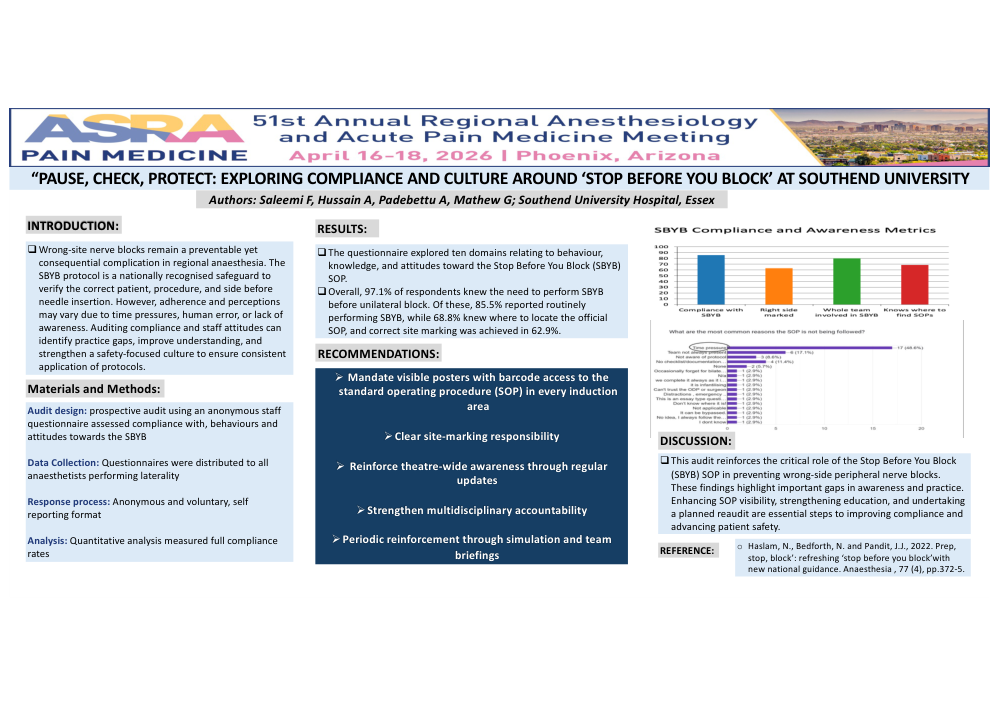
The questionnaire explored ten domains relating to behaviour, knowledge, and attitudes toward the Stop Before You Block (SBYB) SOP. Overall, 97.1% of respondents know they need to perform SBYB before unilateral PNB. Of these, 85.5% of respondents reported routinely performing SBYB, while 68.8% knew where to locate the official SOP, and correct site marking was achieved in 62.9% of cases. Additional questions identified obstacles and improvement priorities. The most common reasons for not following the SOP included time pressure during busy theatre lists, assumptions that the correct side was already obvious, inconsistent site marking by surgeons, and lack of clear prompts in the induction room. Several respondents cited workflow interruptions and limited familiarity with the detailed SOP steps as further barriers.
Participants also suggested measures to strengthen compliance. The most frequent recommendations were mandating visible posters with barcode access to the SOP in every induction area, reinforcing theatre-wide awareness through regular updates, and strengthening multidisciplinary accountability. Respondents also highlighted the need for improved training for new staff, clearer site-marking responsibility, and periodic reinforcement through simulation or team briefings. A re-audit in six months was widely supported to assess the impact of these changes and ensure sustained adherence to safe regional anaesthesia practice.
Discussion
This audit reinforces the critical role of the Stop Before You Block (SBYB) SOP in preventing wrong-side peripheral nerve blocks. These findings highlight important gaps in awareness and practice. Enhancing SOP visibility, strengthening education, and undertaking a planned reaudit are essential steps to improving compliance and advancing patient safety.
References
1. Haslam, N., Bedforth, N. and Pandit, J.J., 2022. Prep, stop, block’: refreshing ‘stop before you block’with new national guidance. Anaesthesia , 77 (4), pp.372-5.